

Introduction to the Quiet Revolution
Life has a way of throwing us into patterns that feel impossible to break.
Day after day, we find ourselves caught in cycles of unfulfilled ambitions, convincing ourselves that circumstances are to blame.
We tell ourselves we’ll start fresh tomorrow, but tomorrow never comes.
The truth is, excuses can feel comfortable, even protective, shielding us from the fear of failure or the effort required for meaningful change.
But what if that pattern could shift? What if the very reasons you’ve been using to stand still could be transformed into fuel for growth?
The quiet revolution isn’t about dramatic changes overnight or flashy moments of inspiration.
Instead, it’s about the subtle shift that occurs when you decide to stop letting excuses control your decisions.
This shift often begins with self-awareness, the moment when you realize the habits and thought patterns keeping you stuck.
It’s not about blaming yourself but about taking an honest look at how often “I don’t have time” or “I’m not ready” has replaced action.
For example, think about how often a fear of failure keeps people from pursuing what they truly want.
Maybe you’ve wanted to pick up a new skill, apply for a job that excites you, or work on a passion project.
The first thought that comes up might be that you’re not skilled enough or you don’t have the resources.
These thoughts can be convincing, and they stop many people in their tracks.
However, when you take a moment to step back, you might realize that the skill gap can be addressed with small, steady efforts or that resources can be found with creativity and persistence.
The power of this internal shift lies in its simplicity.
It’s not about waiting for a perfect moment or external motivation.
It’s about quietly deciding that the time to act is now, even in small ways.
This approach might seem less exciting than sweeping resolutions, but it’s far more sustainable.
Each small step creates a ripple effect, building momentum and showing you that progress is possible even without perfect conditions.
This revolution often begins when you take ownership of your choices rather than allowing outside circumstances or excuses to dictate your path.
It’s not easy to take that first step. It requires honesty, effort, and a willingness to embrace discomfort.
But it’s within this quiet and consistent effort that real growth begins to take shape.
This is the starting point of change; the moment when the excuses stop being the answer.
Recognizing When Excuses Hold You Back

Excuses often disguise themselves as valid reasons, making it difficult to see how much power they hold over your decisions.
They sneak into everyday thoughts, convincing you that waiting for the “right time” or needing to be more prepared is logical.
But the truth is, these excuses tend to mask deeper fears or uncertainties, keeping you in the same place when you could be moving forward.
Take a closer look at the small ways excuses creep in.
For instance, how often do you say you don’t have time to work on a personal goal, even though you find time to scroll through social media or binge watch your favorite shows?
Or maybe you’ve told yourself that you’ll start exercising once you have more energy, but the cycle of inactivity keeps you feeling tired.
These thought patterns create a false sense of comfort, allowing you to avoid the discomfort of effort or change.
Fear is often at the root of excuses.
Fear of failure, fear of rejection, and even fear of success can all play a role.
Think of someone who dreams of writing a book but tells themselves they’re not talented enough or that no one would care about their story.
The truth is, they might just be afraid of putting their ideas out into the world and facing judgment.
Understanding this fear doesn’t make the excuses disappear, but it helps you see them for what they truly are; mental blocks rather than immovable barriers.
Sometimes, excuses come from a lack of clarity or direction.
If you’re unsure what steps to take, it’s easier to avoid taking any at all.
This was the case for Alex, who wanted to switch careers but kept delaying action because he didn’t know where to start.
Breaking his goal into smaller tasks, like researching job openings or reaching out to professionals in his desired field, helped him cut through the fog of uncertainty and get moving.
Other excuses stem from comparison.
You might look at someone else’s success and feel like you could never measure up.
This type of thinking can paralyze you, convincing you that it’s better not to try at all.
However, shifting the focus back to your own journey can help you move past this mental trap.
Recognizing when an excuse is holding you back takes self-awareness and honesty.
It means questioning whether the reasons you’ve been giving yourself are genuinely true or if they’re simply easier to accept than the discomfort of taking responsibility for your life.
The Turning Point: When Excuses Lose Their Power
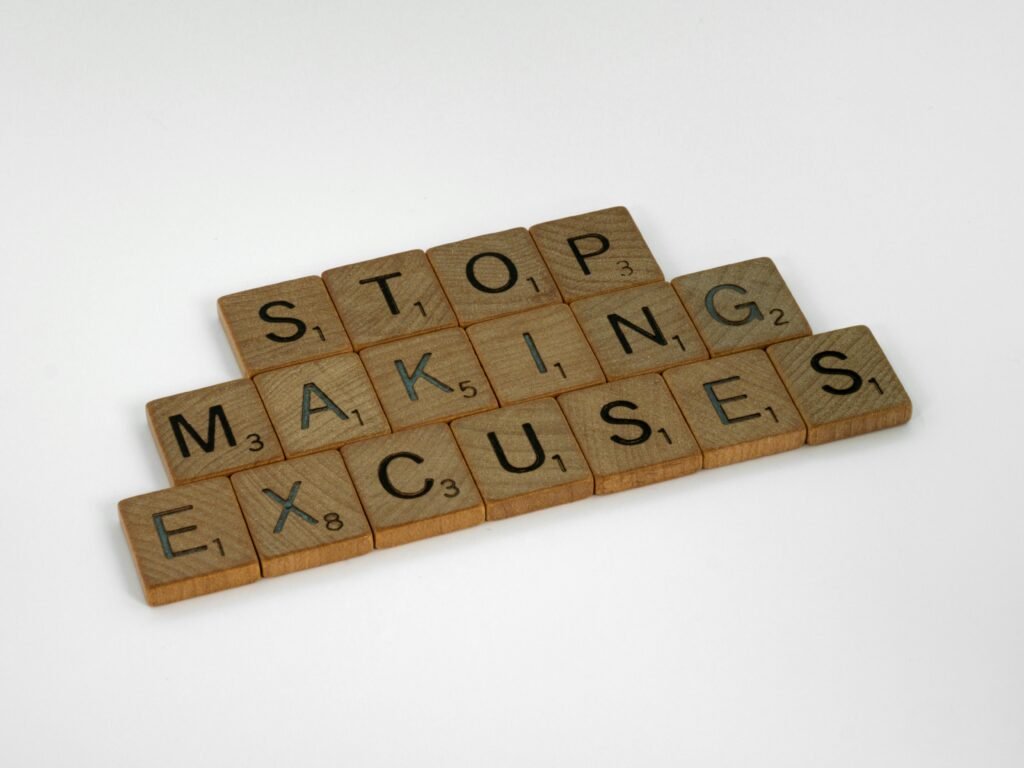
Change often begins when the discomfort of staying the same becomes greater than the effort required to move forward.
This shift isn’t always dramatic; sometimes, it’s as subtle as realizing you’ve been making the same promises to yourself for months, or even years, with little to show for it.
That awareness can spark a moment of clarity, where you see your excuses for what they are: roadblocks you’ve created.
For some, the turning point comes after a significant life event.
Take Lisa, who always told herself she didn’t have time to focus on her art because of her demanding job.
When her company downsized and she lost her position, she realized she could no longer hide behind her busy schedule.
With no more excuses, she took the first step by dedicating her mornings to her creative work.
What began as a small effort quickly grew into something meaningful, simply because she stopped allowing her excuses to dictate her priorities.
Other times, the moment arises from an accumulation of smaller frustrations.
Think about someone like Daniel, who constantly postponed working on his fitness.
Each missed workout felt inconsequential, but over time, he grew tired of feeling sluggish and unhealthy.
One day, after struggling to keep up with his kids during a family outing, Daniel decided enough was enough.
It wasn’t a grand gesture or dramatic realization, but that moment of being fed up became the catalyst for real change.
Even ordinary routines can lead to breakthroughs.
For example, Alex always dreamed of starting a business but hesitated due to fear of financial risk.
One night, while talking to a friend, he realized how much time he spent second guessing himself instead of planning concrete steps forward.
That conversation helped him see that his fear of failure had done nothing but delay his dreams.
Within weeks, he began dedicating evenings to researching his ideas, creating a plan, and eventually building his business.
Sometimes, the turning point comes when someone else challenges you to confront your excuses.
Rachel often told herself she wasn’t athletic and that exercise “just wasn’t for her.”
When a close friend invited her to join a beginner’s running group, she hesitated but eventually agreed.
The group’s supportive environment helped her push past her mental barriers.
After her first 5K, she realized that her belief she wasn’t capable had only been an excuse to avoid trying.
This turning point doesn’t mean the work is over; it’s simply the moment where action begins to replace hesitation.
The choice to stop allowing excuses to control your decisions can be life-changing, no matter how small that first step may seem.
Steps to Initiate Real Change

Making real change requires practical steps that focus on taking consistent action.
One of the first strategies is to identify a single goal that feels both meaningful and achievable.
Starting small helps you avoid feeling overwhelmed and allows you to build confidence as you make progress.
For instance, if you’ve been putting off a fitness routine, begin with just 10 minutes of exercise a day. Over time, you can increase the intensity or duration as it becomes part of your daily life.
Breaking down larger goals into smaller, manageable tasks is another effective way to keep moving forward.
When faced with a big goal, it’s easy to feel paralyzed by the enormity of what lies ahead.
Instead, break it into steps you can complete one at a time.
Take Mia, who wanted to start her own business.
Instead of diving in all at once, she focused on smaller actions, like creating a budget, building a website, and networking with people in her industry.
Each step brought her closer to her goal without feeling overwhelming.
Accountability can also play a significant role in maintaining momentum.
Sharing your goal with someone you trust can make a big difference.
This person can act as a sounding board, offering encouragement and helping you stay focused.
For example, Carlos partnered with a friend who shared his goal of improving their financial habits.
Together, they checked in weekly to discuss their progress, celebrate wins, and troubleshoot challenges.
Having someone to lean on gave him the extra push he needed.
Another key strategy is to develop self-awareness around negative thought patterns that may sabotage your efforts.
These thoughts often manifest as self-doubt or procrastination, making it harder to take action.
When you catch yourself thinking, “I’ll never be good at this,” replace it with a statement like, “I’m learning and improving with every step I take.”
This shift in mindset can empower you to keep moving forward, even when challenges arise.
Time management is crucial for creating space in your day to focus on your goals.
Audit how you currently spend your time and identify areas where you could adjust.
Maybe you could set limits on screen time or dedicate part of your morning to your priorities.
Small adjustments like these help carve out the time you need for consistent effort.
Lastly, reward yourself for progress. Recognizing even small wins reinforces positive behavior and helps sustain motivation.
Whether it’s treating yourself to something you enjoy or simply acknowledging your effort, celebrating milestones can make the process feel more rewarding and help you stay on track.
Sustaining the Change

To sustain the progress you’ve made, it’s essential to build habits that reinforce the changes you’ve worked so hard to initiate.
One way to do this is by creating routines that make your new behaviors feel automatic.
For example, if you’ve committed to improving your health, setting aside the same time each day for meal prep or exercise can help turn these actions into non-negotiable parts of your schedule.
Consistency is key; over time, these routines become second nature, reducing the mental energy required to maintain them.
Tracking your progress can also help you stay on course.
Whether it’s through journaling, a habit tracker, or even a digital app, keeping tabs on your achievements provides tangible proof of how far you’ve come.
Seeing progress laid out visually can be a powerful motivator and a reminder of the commitment you’ve made to yourself.
For example, someone working on financial goals might track their savings or debt repayment milestones.
Each small victory builds confidence and reinforces the desire to continue.
It’s also important to remain flexible and adapt as needed.
Life isn’t static, and there will inevitably be setbacks or moments when progress feels slow.
Instead of letting these instances derail your efforts, view them as opportunities to learn and adjust.
If a particular strategy stops working or becomes less effective, be open to experimenting with new approaches.
For example, if your current workout routine starts to feel stale, switching to a different activity might help you reignite your enthusiasm.
Surrounding yourself with supportive people can make a significant difference in sustaining change.
Friends, family, or mentors who encourage your efforts and celebrate your wins can help keep you accountable and motivated. Additionally, sharing your progress with others can strengthen your commitment.
A study on goal achievement emphasizes the role of social accountability in maintaining progress over time Research conducted by Dickson, Moberly, Preece, Dodd, and Huntley shows the importance of self-regulatory goal processes in sustaining New Year’s resolutions and improving mental well-being..
Finally, don’t underestimate the value of self-reflection.
Taking time to periodically evaluate what’s working and what isn’t allows you to refine your approach and stay aligned with your goals.
For instance, setting aside time each month to assess progress or adjust strategies ensures you remain focused on what matters most.
These reflection periods also provide an opportunity to celebrate wins, no matter how small, which helps maintain momentum and reinforces your commitment to long term growth.
Conclusion: Embracing Your Personal Revolution
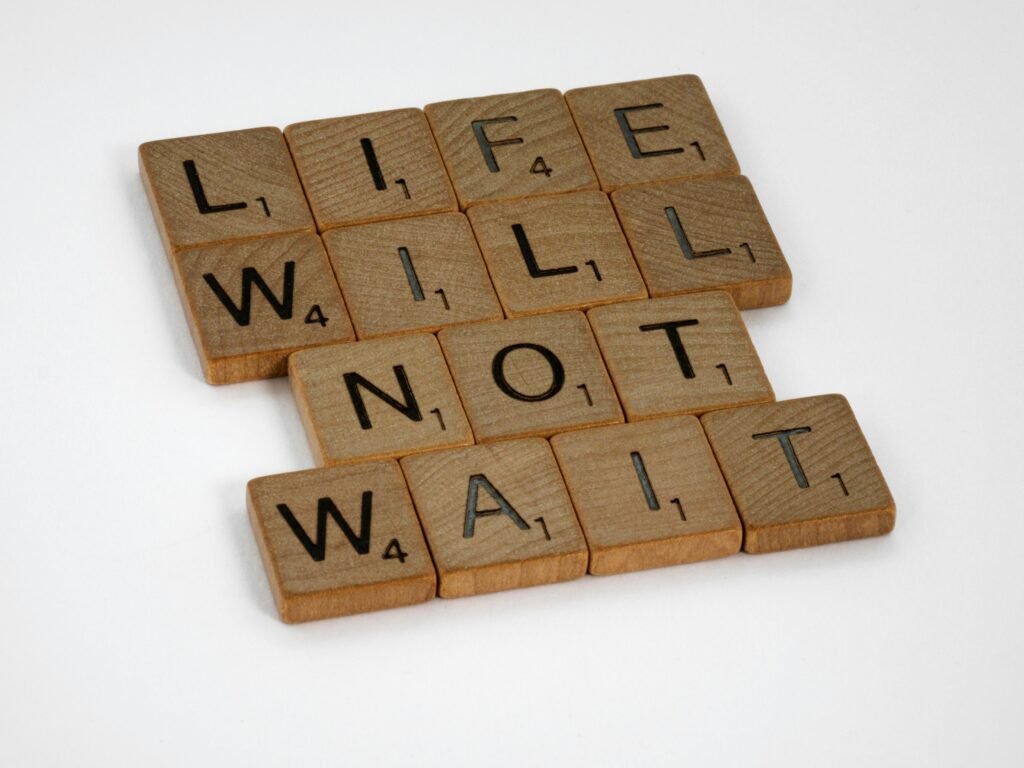
Change is an ongoing process, not a single destination.
What makes it truly life changing is the decision to take ownership of your choices and persist even when it feels difficult.
By letting go of excuses, you allow yourself the freedom to focus on possibilities rather than limitations.
This shift in mindset is not always immediate, but every small step builds the foundation for a more fulfilling life.
Your personal revolution begins with acknowledging where you’ve been holding yourself back and deciding to take action, however small.
It’s about committing to progress, even if it feels slow at times.
Remember that the path to growth doesn’t have to be flawless; it’s the willingness to keep going, learn from setbacks, and adapt as needed that drives meaningful change.
What makes this journey unique is that it’s entirely yours.
Your pace, your goals, and your choices are what shape it.
Comparing your path to others will only distract you from the progress you’ve made.
Instead, focus on building a life that aligns with what truly matters to you.
This might mean reevaluating priorities, creating space for what’s important, or even learning to let go of fears that no longer serve you.
There’s power in celebrating each milestone along the way, no matter how small it might seem.
These moments are proof of your growth and serve as reminders of why you started.
Rewarding yourself reinforces the positive behaviors you’ve worked so hard to cultivate, making it easier to stay motivated for the long haul.
Equally important is the ability to remain flexible.
Life will throw challenges your way, and some plans may not unfold as expected.
Being open to adjusting your strategies ensures that you’re able to keep moving forward, even when the path looks different than you originally imagined.
Ultimately, this revolution isn’t about perfection or achieving a single outcome; it’s about creating a mindset of resilience, accountability, and self-belief.
The most profound changes often stem from the quiet, consistent efforts you make to improve your life, one decision at a time.
Over time, these efforts compound, leading to a life that reflects the person you’ve worked so hard to become.
Keep pushing forward. Every step you take brings you closer to living a life free from excuses and full of possibilities.
Hi.
Awesome site! Looking for key help.
Thanks!
I’ll immediately take hold of your rss as I can’t in finding your e-mail subscription link or newsletter service. Do you have any? Please let me recognise so that I could subscribe. Thanks.
Thank you for the good writeup. It in truth was a entertainment account it. Glance complicated to more brought agreeable from you! By the way, how could we communicate?
byueuropaviagraonline
When some one searches for his essential thing, therefore he/she desires to be available that in detail, thus that thing is maintained over here.
It’s awesome to pay a quick visit this site and reading the views of all friends on the topic of this piece of writing, while I am also keen of getting know-how.
I am really impressed with your writing skills and also with the layout on your blog. Is this a paid theme or did you modify it yourself? Anyway keep up the excellent quality writing, it is rare to see a great blog like this one these days.
Pretty great post. I just stumbled upon your weblog and wanted to say that I have really loved surfing around your blog posts. After all I will be subscribing in your rss feed and I am hoping you write once more very soon!
Hello!
Great forum. Need key advice!
Thanks:)
Right here is the perfect blog for everyone who would like to find out about this topic. You realize so much its almost tough to argue with you (not that I really will need to…HaHa). You certainly put a fresh spin on a topic that has been written about for years. Great stuff, just excellent!
I have read a few good stuff here. Definitely worth bookmarking for revisiting. I surprise how a lot attempt you place to create such a great informative web site.
This is my first time visit at here and i am in fact happy to read everthing at alone place.
Thanks for the marvelous posting! I really enjoyed reading it, you may be a great author. I will be sure to bookmark your blog and will come back someday. I want to encourage you to definitely continue your great posts, have a nice afternoon!
I could not resist commenting. Perfectly written!
Magnificent web site. Lots of helpful information here. I am sending it to a few pals ans also sharing in delicious. And certainly, thank you in your sweat!
Hi there! I’m at work browsing your blog from my new iphone 3gs! Just wanted to say I love reading through your blog and look forward to all your posts! Keep up the outstanding work!
официальный сайт риобет
Thank you for every other informative site. The place else may I get that kind of information written in such an ideal method? I’ve a venture that I’m simply now operating on, and I have been on the look out for such information.
https://mir.autotema.org.ua/obmen-paypal-usd-na-tether-usdt-trc20-bystro-bezopasno-i-udobno/
I’m gone to say to my little brother, that he should also go to see this website on regular basis to obtain updated from most recent reports.
https://www.stradasuites.com/blog/technologie-et-risques-des-codes-gratuits-iron-tv-pro/
This is very interesting, You’re a very skilled blogger. I have joined your rss feed and look forward to seeking more of your great post. Also, I have shared your website in my social networks!
зеркало банда казино
Hello, the whole thing is going nicely here and ofcourse every one is sharing facts, that’s truly good, keep up writing.
byueuropaviagraonline
Wow, marvelous blog format! How long have you ever been running a blog for? you made running a blog look easy. The total look of your web site is great, let alone the content material!
Everything is very open and very clear explanation of issues. was truly information. Your website is very useful. Thanks for sharing.
I believe other website proprietors should take this internet site as an model, very clean and wonderful user genial layout.
Hi there to every one, the contents existing at this web page are actually remarkable for people knowledge, well, keep up the nice work fellows.
https://uaviq.farm/rizannya-armovanoho-plastyku-chy.html
Good day! This is my 1st comment here so I just wanted to give a quick shout out and tell you I truly enjoy reading through your blog posts. Can you recommend any other blogs/websites/forums that cover the same subjects? Thanks a ton!
https://smartbuildforum.com.ua/yak-zrobyty-idealnyi-shov-na-plastyku-pislya-1.html
futurestack – Loved the layout today; clean, simple, and genuinely user-friendly overall.
logicforge – Mobile version looks perfect; no glitches, fast scrolling, crisp text.
bytelab – Overall, professional vibe here; trustworthy, polished, and pleasantly minimal throughout.
zyrotech – Bookmarked this immediately, planning to revisit for updates and inspiration.
omegabyte – Appreciate the typography choices; comfortable spacing improved my reading experience.
techdock – Bookmarked this immediately, planning to revisit for updates and inspiration.
bitzone – Loved the layout today; clean, simple, and genuinely user-friendly overall.
codehive – Color palette felt calming, nothing distracting, just focused, thoughtful design.
tronbyte – Navigation felt smooth, found everything quickly without any confusing steps.