

The Motivation Trap
The allure of motivation lies in its ability to inspire action, sparking a sense of excitement and possibility.
It’s often romanticized as the driving force behind achieving goals.
But motivation has a major flaw; it fluctuates.
Some days, it’s abundant, fueling a burst of productivity.
Other days, it’s nowhere to be found, leaving you stuck in a cycle of starting and stopping.
This inconsistency makes motivation unreliable for creating lasting changes.
Imagine setting a goal to wake up early and exercise every morning.
On the first day, your motivation is high, and you spring out of bed, ready to tackle the challenge.
But by day three, the initial excitement fades, and the comfort of hitting the snooze button wins.
The issue isn’t a lack of desire to succeed; it’s the false belief that motivation will always be there when you need it.
Motivation is also heavily influenced by external factors, such as your mood, environment, and energy levels.
Stress at work, a sleepless night, or even a change in routine can drain your motivation.
When your ability to act depends on something so unstable, achieving your goals becomes much harder.
It’s like trying to build a house on a shaky foundation; it may hold up for a while, but it’s not built to last.
Another problem with relying on motivation is the pressure it creates.
People often feel they need to be “in the zone” to make progress, which leads to procrastination when they don’t feel motivated.
For example, someone aiming to write a book may wait for inspiration to strike instead of committing to a daily writing schedule.
Over time, this approach can result in missed opportunities and stalled progress.
The mindset around motivation also tends to focus too heavily on outcomes rather than processes.
When people are motivated by the idea of a specific result, like losing a certain amount of weight or achieving a promotion, they risk losing interest when progress slows or obstacles arise.
Without a clear process to guide them, it’s easy to feel discouraged and give up altogether.
These limitations of motivation highlight why it’s essential to look beyond it as the primary tool for self-improvement.
While it can help you get started, it rarely carries you through the inevitable challenges of building new habits or making meaningful changes.
Recognizing the shortcomings of motivation opens the door to a smarter approach; one rooted in systems, discipline, and strategies that promote consistent growth over time.
The Power of Systems
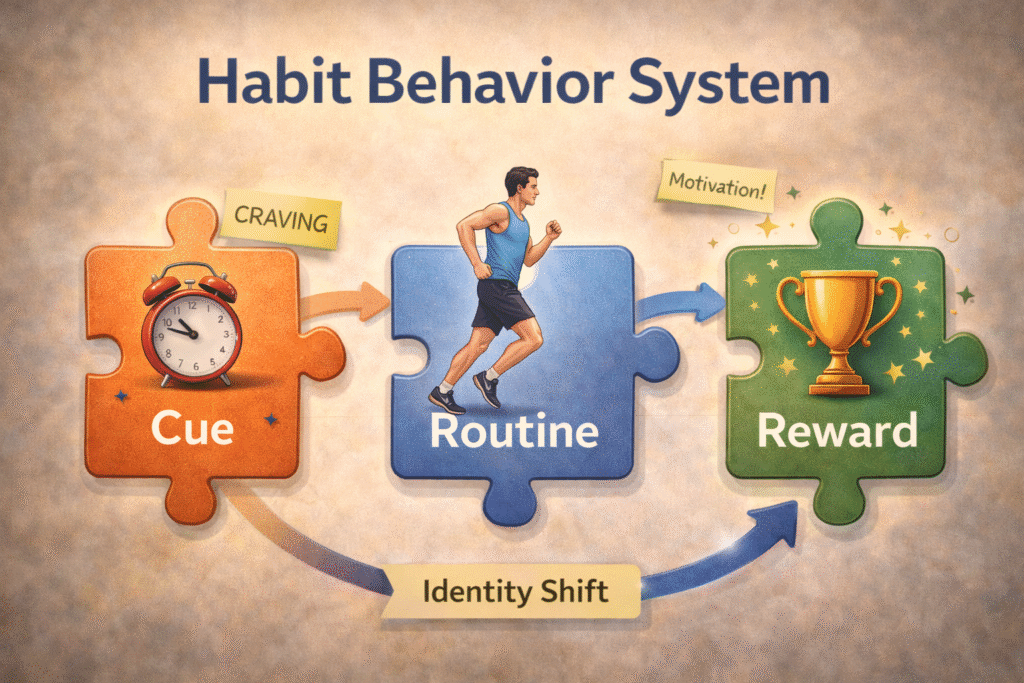
When it comes to making progress that lasts, systems provide a dependable framework for success.
Unlike motivation, which fluctuates based on circumstances, systems are built for consistency.
By creating routines that integrate specific behaviors into your daily life, you reduce the need for constant willpower and instead rely on structure to keep moving forward.
Research supports this approach, showing that repeating a behavior in a stable context helps establish automatic habits as research suggests this reduces the need for conscious motivation.
One way systems excel is by shifting your focus to the process itself.
Take fitness as an example.
Instead of aiming for a specific weight loss goal, you could design a system where you exercise three mornings a week and prep nutritious meals every Sunday.
This process oriented mindset makes it easier to stay on track, as the emphasis is on the steps you take regularly, not on a distant outcome that may feel overwhelming.
Over time, these consistent actions become second nature, supporting sustainable growth without the constant need for mental effort.
Systems also simplify decision making.
When you rely on motivation, you might find yourself negotiating with your own mind about whether or not to take action.
With a system in place, the decisions are already made.
For example, if your system includes writing for 30 minutes every morning, you don’t have to waste energy debating whether today is a good day to write; you simply follow the system.
This structured approach not only saves time but also helps preserve your mental energy for other priorities.
Another strength of systems is their adaptability.
Life can be unpredictable, but systems allow for adjustments without derailing your progress.
For instance, if your schedule changes and you can no longer work out in the mornings, you can shift your routine to evenings while maintaining the same frequency and structure.
This flexibility makes systems highly effective for managing long-term goals, as they can evolve alongside your circumstances.
What’s more, systems build momentum through incremental progress.
Small, repeatable actions accumulate over time, leading to meaningful outcomes.
For example, dedicating just 15 minutes a day to learning a new skill might not feel significant in the moment, but over the course of a year, those minutes add up to over 90 hours of practice.
This compounding effect reinforces the importance of sticking to your system, even when immediate results aren’t visible.
By making actions consistent and automatic, systems help you stay focused on the behaviors that drive change.
They allow you to move forward regardless of fluctuating moods or external circumstances, creating a reliable pathway for steady improvement.
This approach removes much of the uncertainty that comes with relying solely on motivation, empowering you to stay on course for the long haul.
Building Self-Improvement Habits
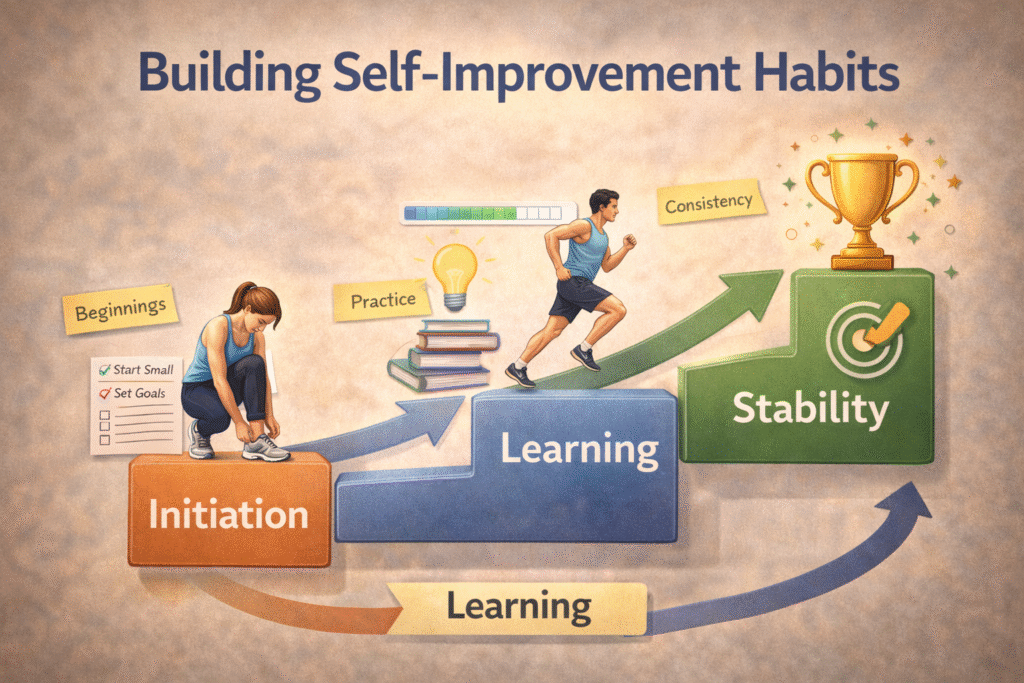
Creating effective self-improvement habits requires careful planning and a focus on consistency.
At the core of habit formation lies a three phase process: initiation, learning, and stability.
During initiation, you identify a behavior to adopt and establish the context in which it will occur.
In the learning phase, repetition plays a key role, as consistently practicing the behavior strengthens the habit.
Finally, in the stability phase, the habit becomes second nature, requiring less mental effort to maintain. and effortless.
Research has shown that repetition over time is essential for turning a behavior into an automatic response.
For example, a study examining habit formation found that participants who engaged in a daily health focused activity in response to a specific cue reached a peak in habit strength after 66 days on average.
This underscores the importance of staying patient and committed to the process, as habits need time and consistent practice to take root.
Another essential factor in building habits is choosing behaviors that align with your personal values and goals.
When habits are driven by internal motivations rather than external pressures, you’re more likely to stay engaged and committed over time.
Research suggests that behaviors tied to personal autonomy and meaningful aspirations not only promote sustained interest but also increase the likelihood of long term adherence.
by enhancing autonomy and sustaining interest.
To successfully incorporate new habits, consider starting small.
Introducing manageable behaviors that can easily fit into your existing routine minimizes resistance and builds confidence.
For example, if your goal is to read more, you might begin with just five minutes of reading each evening before bed.
Once this becomes a regular part of your schedule, you can gradually increase the time spent reading.
This step by step approach allows you to make progress without feeling overwhelmed by significant changes all at once.
Additionally, creating specific cues or triggers can help reinforce your habits.
These cues serve as reminders to take action, linking your new behavior to a particular time, place, or event.
For instance, placing your workout gear by the door can signal it’s time to exercise after work.
Over time, these triggers strengthen the connection between the cue and the behavior, fostering automaticity.
By investing in these intentional strategies, you create a reliable framework for embedding habits that support meaningful growth, paving the way for lasting improvement.
Discipline Over Motivation

Discipline is the steady force that propels progress, even when motivation falters.
Unlike motivation, which is often fleeting and unpredictable, discipline provides the structure needed to maintain consistent action.
It is not about waiting for the right mood or energy level but about committing to the process regardless of external or internal conditions.
For instance, someone working on building a healthier lifestyle might not always feel excited to exercise, but their discipline ensures they show up for their workouts because it’s part of their routine.
One of the most impactful aspects of discipline is its ability to foster habits through small, actionable steps.
Research supports the idea that incremental changes can lead to significant outcomes over time.
A small adjustment, like adding a few extra minutes to a daily walk, can enhance habit formation and increased self-efficacy.
These small victories not only create momentum but also strengthen your confidence in the ability to stick to a plan.
Another important factor in discipline is the focus on consistency over perfection.
Unlike motivation, which often fuels an all or nothing mindset, discipline allows for flexibility and resilience.
Missing a day of practice or slipping up on a goal doesn’t mean failure.
What matters is returning to the habit and continuing the effort.
For example, if you miss a scheduled workout, discipline encourages you to resume your routine the next day rather than abandoning it entirely.
This approach reduces the risk of burnout and helps sustain long term efforts.
Discipline also plays a critical role in managing distractions and maintaining focus.
In a world filled with endless choices and competing priorities, it’s easy to lose track of what truly matters.
Discipline helps create boundaries, ensuring that time and energy are allocated toward actions that align with your goals.
For instance, someone aiming to complete a personal project might set a specific time each day to work on it, minimizing interruptions and staying committed to the task at hand.
While motivation often relies on external rewards or fleeting inspiration, discipline stems from an internal commitment to follow through.
This internal drive helps you stay on track, even when challenges arise or progress feels slow.
It also cultivates a sense of personal responsibility, empowering you to take ownership of your actions and outcomes.
By maintaining a disciplined approach, you create a reliable framework that supports consistent progress, builds resilience, and reinforces the habits necessary for long term growth.
It’s this steady effort, rather than sporadic bursts of motivation, that ultimately leads to meaningful, lasting change.
Behavior Change for Long Term Success

Designing sustainable behavior change requires thoughtful strategies that go beyond temporary fixes.
Research shows that habit based interventions can lead to greater success compared to approaches that lack structure.
As an example, a study revealed that participants who incorporated specific habits for weight loss experienced significantly greater progress, losing an average of 3.8 kg at 32 weeks compared to just 0.4 kg in the control group; highlighting the lasting benefits of structured methods.
An important aspect of creating meaningful change is understanding the role of incremental adjustments.
Instead of focusing on drastic transformations, adopting small, manageable actions can produce powerful results over time.
These small steps help reduce resistance and make it easier to maintain consistency.
For example, setting a goal to walk for 10 minutes after dinner each evening may seem minor, but it serves as a starting point for building a stronger habit over time.
Gradual progression ensures the behavior becomes a natural part of your daily life.
It’s also essential to connect your actions to personal values.
When a new habit aligns with your intrinsic motivations, you’re more likely to stay engaged and committed.
This internal connection not only drives consistent behavior but also fosters a deeper sense of purpose in your journey.
For instance, someone prioritizing family time might focus on adopting healthier eating habits to ensure they have the energy to be present and active with their loved ones.
Another strategy for promoting effective behavior change is reducing friction in your environment.
Small adjustments, like preparing your workspace the night before or setting phone reminders, can make it easier to follow through on your intentions.
These environmental tweaks eliminate unnecessary barriers, helping you stay on track without relying solely on willpower.
Additionally, developing clear triggers or cues, such as starting a journaling habit right after brushing your teeth, can reinforce the connection between the behavior and your routine.
Tracking progress is another valuable tool in shaping long term habits.
Monitoring your actions, whether through journaling, apps, or simple checklists, provides a sense of accountability and highlights areas where adjustments might be needed.
Tracking also allows you to celebrate milestones, reinforcing your commitment to the process.
Importantly, occasional lapses don’t derail progress as much as people often fear.
Research indicates that missing a behavior occasionally doesn’t significantly disrupt the development of automaticity because gains resume once the behavior is performed again.
This insight underscores the importance of focusing on overall patterns of consistency rather than striving for perfection.
Embracing Long Term Growth

Achieving long term growth requires a mindset rooted in patience and adaptability.
Progress often comes in gradual, sometimes imperceptible, increments, which can feel discouraging if you’re only focused on immediate results.
However, this steady accumulation of effort is where the most meaningful transformations happen.
By committing to small, repeatable actions, you create a foundation that supports sustained improvement over time.
One key aspect of fostering long term growth is allowing for flexibility in your systems and habits.
Life is rarely static, and circumstances will inevitably shift, whether due to changes in schedules, unexpected obstacles, or evolving goals.
Adapting your approach to accommodate these changes ensures you remain consistent without becoming discouraged by temporary disruptions.
For instance, if a busy season at work limits your time for a particular routine, scaling back the time commitment rather than abandoning it altogether allows you to stay on track while reducing unnecessary stress.
It’s equally important to adopt a mindset that focuses on overall patterns rather than isolated setbacks.
Perfection is not a prerequisite for progress.
Research indicates that occasional lapses in behavior do not significantly disrupt the development of habits or automatic responses.
Gains resume once the behavior is performed again.
This perspective encourages resilience and reduces the self-criticism that often derails long-term efforts.
Tracking your progress is another valuable tool for staying motivated during this journey.
Monitoring milestones, whether through journaling, habit tracking apps, or visual tools like charts, provides tangible evidence of your growth.
These records offer an opportunity to celebrate your achievements and identify patterns that may require adjustment.
Recognizing the cumulative impact of your actions reinforces your commitment to the process, even when individual days don’t feel particularly productive.
Long term growth is also deeply tied to intrinsic motivation.
When your efforts align with your personal values and priorities, the process becomes more fulfilling.
For example, someone who values creativity might find joy in learning a new artistic skill, while someone focused on health may draw purpose from habits that enhance their well being.
This internal alignment sustains your drive and strengthens your connection to the goals you’ve set.
Ultimately, long term growth is about consistency and embracing the process.
It’s not about quick wins but rather creating a system that supports your ambitions and adapts to life’s inevitable challenges.
By staying flexible, tracking progress, and prioritizing actions that resonate with your values, you build the resilience and discipline needed for lasting success.
This deliberate, patient approach ensures that your efforts lead to meaningful and enduring change.