
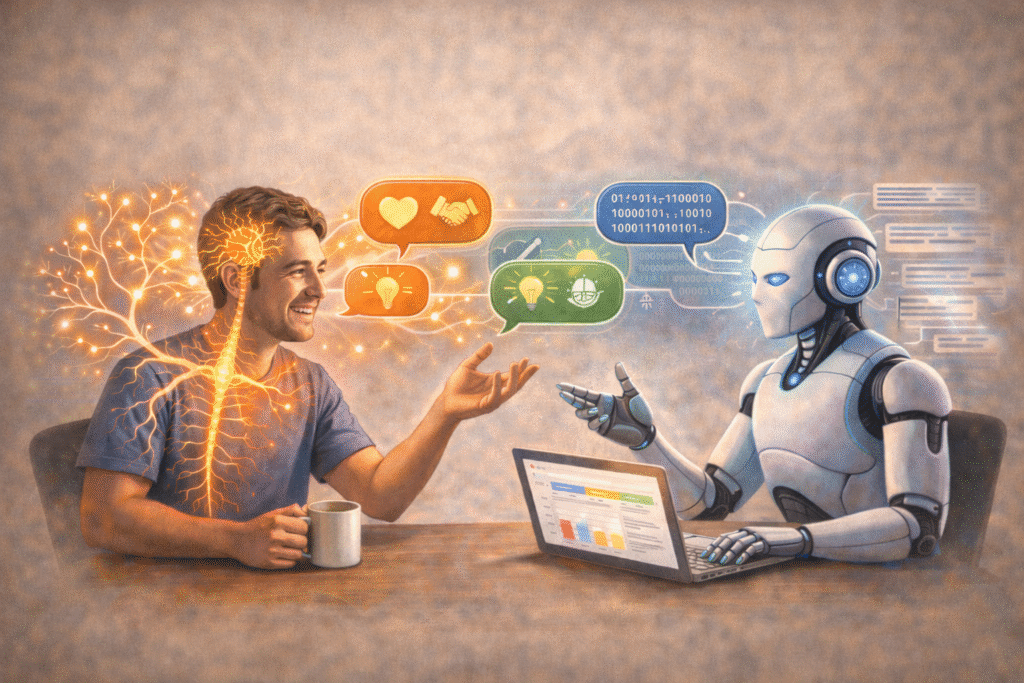
Introduction to Persuasion
In a world increasingly shaped by artificial intelligence, the ability to persuade remains an essential human skill.
Persuasion is not just about delivering a message; it’s about forging a connection, understanding the emotions behind decisions, and inspiring action.
At its core, it’s a deeply human process, grounded in the unique way we experience and interpret emotions.
While AI may excel at analyzing patterns or generating vast amounts of text, it operates within the limits of logic and data, often missing the intricacies of human emotion that make communication truly impactful.
One of the key elements of persuasion is the ability to adapt and respond in real time.
Humans naturally adjust their tone, choice of words, and approach based on the reactions of their audience, whether it’s through subtle shifts in body language, facial expressions, or verbal cues.
For example, a speaker addressing a live audience might notice signs of confusion and pivot to provide additional clarification or examples.
This fluidity and responsiveness are areas where humans shine, and AI, no matter how advanced, struggles to keep up.
Persuasion also thrives on creativity and storytelling.
Humans have a natural ability to craft narratives that evoke emotion, create empathy, and foster a sense of shared understanding.
These stories don’t just present information; they bring it to life in a way that aligns with the listener’s values or experiences.
For instance, an inspiring anecdote about someone overcoming a challenge can ignite motivation in ways that a purely fact-driven message cannot.
While AI can generate text that mimics the structure of a story, it often lacks the emotional nuance that makes a story compelling and memorable.
Another cornerstone of persuasion is trust. Building trust isn’t just about presenting accurate information; it’s about showing authenticity and understanding.
People are more likely to be persuaded by those they feel understand their perspective or share their concerns.
AI may process data to predict preferences, but it cannot genuinely “care” about someone’s needs or aspirations, leaving it unable to replicate the sincerity that humans naturally bring to interactions.
This gap highlights why persuasion, in its truest form, remains firmly in the domain of human capability.
Understanding the Human Touch

Empathy is a uniquely human trait that allows individuals to truly step into another person’s shoes and understand their emotions, desires, and motivations.
This ability to connect on an emotional level gives humans an edge in persuasive communication.
While AI can analyze patterns and respond with preprogrammed logic, it cannot replicate the depth of human intuition.
For example, when someone shares a personal challenge, a human listener can pick up on the tone of their voice, subtle pauses, or even the way their words are framed, offering an emotionally attuned response.
These nuances, which are second nature to us, remain out of reach for AI systems.
Take a conversation about a deeply personal topic.
A human might adjust their approach based on the other person’s body language or emotional tone, offering comfort or encouragement when needed.
AI, by contrast, might generate an appropriate response based on data but lacks the ability to feel or genuinely react to the situation.
It is this authenticity that makes human interactions stand out.
Moreover, emotional intelligence involves understanding not just words but also the unspoken context behind them.
For instance, a skilled negotiator doesn’t rely solely on the terms being discussed; they read the room, sensing tension or excitement, and adapt their approach to align with the emotions at play.
This sensitivity to context allows humans to steer interactions in a way that feels natural and collaborative.
The human touch also shines in situations requiring creativity and empathy working together.
Consider a fundraiser aimed at addressing a local crisis.
The way the message is crafted; whether it’s sharing a story of a family in need or celebrating a community coming together, relies heavily on understanding the audience’s emotions and values.
These kinds of messages, designed to inspire action, are not just based on delivering facts but on forming a genuine connection with the audience.
Humans also have the ability to recognize when emotions are too intense or require careful handling.
Whether it’s softening a critique to maintain trust or delivering a difficult message with compassion, these moments demand a level of emotional sensitivity that AI cannot match.
This ability to balance logic with emotion makes human communication inherently persuasive.
Examples of Human Persuasion

One striking example of human persuasion in action is the ability of teachers to inspire and motivate students in ways that go beyond textbooks or lesson plans.
A dedicated teacher can observe when a student is struggling, not just academically but emotionally, and adjust their approach to meet that student’s unique needs.
Whether it’s sharing a personal story of overcoming failure or offering encouragement tailored to a student’s potential, this level of personal connection fosters trust and engagement.
No algorithm can replicate the depth of care and understanding required to ignite a student’s passion for learning.
Similarly, consider how human empathy plays a role in leadership.
A manager addressing a team during a challenging project might notice fatigue or frustration among team members and choose to shift the focus, offering words of appreciation or a moment to acknowledge the team’s hard work.
These small but meaningful gestures resonate on an emotional level, helping to rebuild morale and reinforce a sense of purpose.
AI tools may offer suggestions based on data, but they lack the instinctive ability to feel the pulse of a room and respond accordingly.
In the world of healthcare, human persuasion often makes a significant difference in patient outcomes.
For example, a doctor advising a patient to adopt a healthier lifestyle doesn’t just rely on delivering facts about diet or exercise.
They may frame the conversation around the patient’s personal goals, family, or future aspirations, weaving these elements into the recommendations.
This personalized and emotionally attuned approach can motivate behavior change in ways that clinical data alone cannot achieve.
Another scenario where humans shine is in conflict resolution.
Mediators and negotiators are skilled at finding common ground by understanding the emotions and motivations of all parties involved.
By listening attentively, validating concerns, and proposing solutions that feel fair and considerate, they can foster cooperation and agreement even in tense situations.
While AI can analyze negotiation patterns, it lacks the ability to convey sincerity or adapt to subtle emotional dynamics, which are crucial in resolving conflicts effectively.
Even in everyday life, humans rely on these skills to connect and persuade.
Whether it’s convincing a friend to try a new hobby or encouraging a colleague to see a different perspective, these interactions highlight the irreplaceable value of emotional intelligence and genuine human understanding.
Limitations of AI in Persuasion

While artificial intelligence has made incredible advancements, its ability to connect on a truly emotional level remains limited.
AI systems process vast amounts of data and can simulate conversational tones or responses, but this does not equate to a deep understanding of human emotions.
Interactions with AI often feel formulaic, lacking the spontaneity and genuine warmth that humans naturally bring to communication.
For persuasion to be effective, it often requires authenticity; something AI simply cannot replicate because it doesn’t experience emotions or comprehend the complexity of human feelings.
Studies show that people can quickly detect when AI attempts to mimic empathy, often resulting in a disconnect.
This artificial sense of understanding can lead to interactions that feel hollow, undermining trust and engagement according to research.
For instance, when AI generates responses intended to comfort or encourage, the lack of emotional depth becomes apparent.
Without the ability to intuitively respond to subtle emotional cues, AI risks delivering messages that seem out of place or insincere.
AI also struggles with understanding the context behind human emotions.
While it can analyze language patterns or tone to a degree, it cannot grasp the unspoken layers that often define communication.
For example, a human might interpret a hesitant response during a conversation as a sign of uncertainty and adjust their tone or approach to reassure the other person.
AI, however, operates based on predefined algorithms, making it less adaptable in real time interactions.
This rigidity can make its responses seem overly generic or detached, especially in nuanced situations.
Moreover, AI’s reliance on data driven analysis can limit its ability to connect on a personal level.
While it may recommend actions or tailor content based on user preferences, it lacks the intuition to understand why those preferences exist.
This gap becomes especially evident in scenarios that require a delicate balance of logic and emotion, such as resolving interpersonal conflicts or inspiring behavior change.
The inability to navigate these emotionally charged dynamics puts AI at a disadvantage when compared to human communicators who can build rapport and trust through genuine understanding and emotional sensitivity.
Advantages of Emotional Intelligence in Copy

Emotional intelligence is the secret ingredient behind truly effective copywriting.
It allows writers to go beyond simply sharing information and instead craft messages that resonate deeply with their audience.
By understanding the emotions, needs, and values of readers, emotionally intelligent copy connects on a human level, making messages feel relevant and meaningful.
One of the standout benefits of emotional intelligence in copy is its ability to inspire empathy.
When a message acknowledges the feelings and challenges of the audience, it fosters a sense of being seen and understood.
For instance, a campaign promoting mental health awareness might include language that validates feelings of struggle while also offering hope and encouragement.
This kind of messaging is more likely to engage people because it aligns with their experiences.
Emotionally intelligent copy also has the power to evoke emotions that drive action.
For example, a nonprofit raising funds for disaster relief might use a vivid, heartfelt story of resilience to motivate donations.
The story doesn’t just inform about the crisis; it immerses readers in the lived experiences of those affected, making the cause feel personal and urgent.
This emotional connection transforms a passive audience into active participants.
Additionally, emotional intelligence helps writers tailor messages to their audience’s unique perspective.
Take a marketing campaign for a sustainable product as an example.
Instead of focusing solely on technical benefits like reduced carbon emissions, an emotionally intelligent approach might highlight how choosing the product contributes to a healthier planet for future generations.
By tapping into personal values and aspirations, the message becomes more compelling and memorable.
The ability to balance emotions with authenticity is another key strength of emotionally intelligent copy.
People are naturally drawn to content that feels genuine and relatable.
For instance, a brand sharing a story of its humble beginnings or a lesson learned from failure builds trust by showing vulnerability.
This authenticity helps create a stronger bond with the audience, making the message more persuasive.
Ultimately, emotional intelligence equips writers with the tools to shape content that feels personal and impactful.
It’s not just about what is being said; it’s about how it’s being conveyed and how it aligns with the audience’s emotional world.
The Future of Human and AI Collaboration

As AI technology continues to evolve, its ability to complement human strengths offers exciting opportunities for more effective communication.
By combining the precision and efficiency of AI with the emotional intelligence and creativity of humans, we can tackle challenges that neither could fully address alone.
This collaboration allows for a new approach to problem solving, particularly in crafting messages that are both data driven and emotionally resonant.
One way this partnership can flourish is in the field of copywriting.
AI can process audience preferences, analyze engagement patterns, and suggest data informed strategies.
For instance, it might identify keywords or trends that resonate with a specific demographic.
However, the real power emerges when humans interpret these insights, adding the emotional depth needed to make messages truly impactful.
A writer could take AI’s suggestions and weave them into a compelling story that evokes empathy and connects on a personal level.
Similarly, customer service is an area ripe for human AI collaboration.
AI can handle straightforward inquiries, offering quick and consistent responses.
But when situations involve frustration, confusion, or other complex emotions, humans step in with the empathy and adaptability necessary to de-escalate tension and build trust.
Together, they create a seamless experience where efficiency meets understanding.
In marketing, this synergy is even more pronounced.
AI might predict purchasing behaviors or suggest optimal times for engagement, but it’s the human touch that ensures campaigns feel authentic and relatable.
For instance, while AI can analyze which message structures yield higher click through rates, humans can refine those messages to align with cultural nuances or emotional undertones, creating a narrative that speaks directly to the audience’s values.
The use of AI as a brainstorming tool is another promising application.
Writers, marketers, or strategists can rely on AI to generate ideas or alternative phrasing while retaining the final say in selecting the approach that best suits the intended audience.
This allows humans to focus their energy on the creative aspects of communication, leveraging AI as a supportive partner rather than a replacement.
By bringing together human emotional intelligence and AI’s analytical power, this collaborative model has the potential to redefine how we approach persuasion, offering solutions that are both strategic and deeply meaningful.
Conclusion: The Human Edge

The art of persuasion thrives on the human ability to connect on a personal and emotional level, something AI is not yet equipped to replicate.
Emotional intelligence gives humans the power to sense, interpret, and respond to the subtleties of communication, creating trust and fostering understanding in ways that transcend data driven logic.
This unique skill set remains a key differentiator in an age where technology plays an ever-growing role in communication.
Humans bring intuition, adaptability, and creativity into every interaction.
Whether it’s tailoring a message to align with someone’s emotions, drawing from personal experiences to create relatable stories, or reading unspoken cues to guide the tone of a conversation, these moments of connection make human communication dynamic and impactful.
These abilities ensure that human interactions feel genuine and responsive, unlike the preprogrammed nature of AI responses.
AI has undoubtedly become a powerful tool, capable of processing immense amounts of information and offering valuable insights. However, its strengths lie in supplementing human efforts rather than replacing them.
The collaboration between humans and AI opens up opportunities to combine efficiency with emotional depth, allowing for more comprehensive solutions in communication.
AI can handle data and suggest strategies, but humans are the ones who transform those strategies into messages that resonate on a deeper level.
As technology continues to advance, the ability to integrate human emotional intelligence with AI’s analytical capabilities will define the future of communication.
By leaning into what humans do best; creating connections, inspiring action, and understanding emotions, we can ensure that technology supports rather than diminishes the humanity in our interactions.
Ultimately, it is this emotional depth and understanding that keep humans at the forefront of persuasion.
While AI can assist in improving processes and providing insights, it is the human capacity to relate, empathize, and adapt that makes communication meaningful and effective.
This blend of emotional intelligence and creativity ensures that humans remain an indispensable part of persuasive communication, even in the ever evolving AI era.