
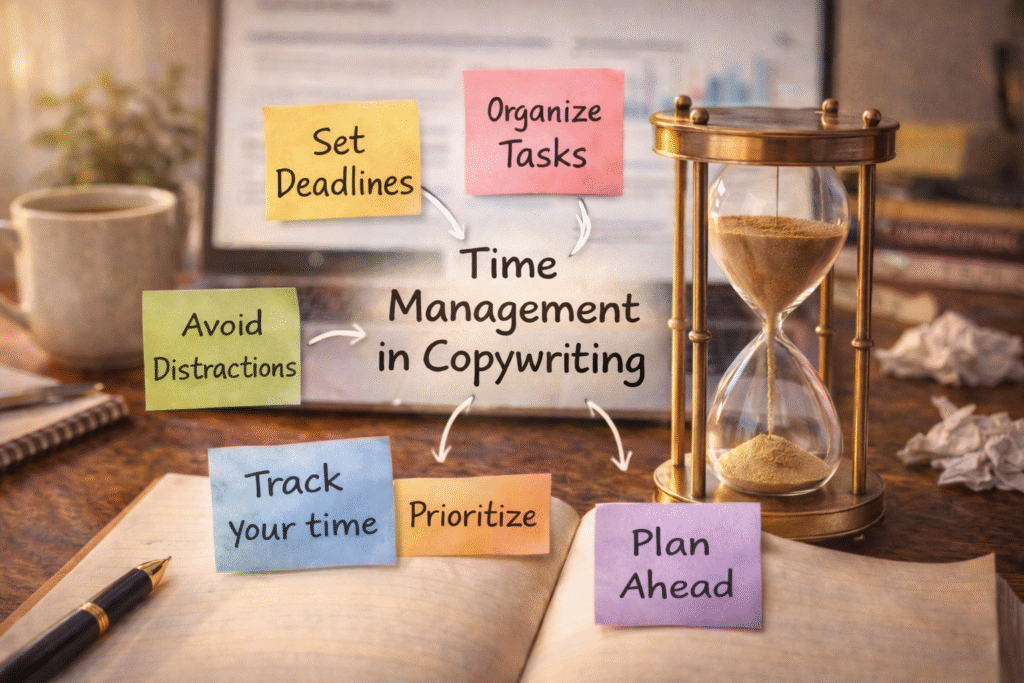
Introduction to Time Management in Copywriting
Time management is an essential part of succeeding in copywriting, where every project is tied to a deadline.
This career requires juggling multiple tasks, from brainstorming ideas to refining the final draft, all within a specified time frame.
Without strong time management skills, it’s easy to feel overwhelmed or fall behind, which can negatively impact both the quality of work and professional reputation.
One of the reasons time management is so critical in copywriting is because of its direct connection to productivity.
When writers allocate time intentionally, they can better handle revisions, meet client expectations, and avoid last-minute scrambles.
For example, breaking down a larger assignment into smaller steps; such as research, drafting, and editing, helps ensure steady progress without unnecessary stress.
This structured approach not only keeps projects on track but also reduces the risk of missing important details.
Another key element is the ability to prioritize.
Copywriters often face competing demands, such as working on multiple campaigns or responding to unexpected client feedback.
By identifying the most important tasks and focusing energy where it’s needed most, they can maintain efficiency without sacrificing quality.
For instance, tackling high-priority assignments early in the day, when energy levels are highest, can lead to more effective and creative outcomes.
Moreover, practicing good time management fosters better decision making in high pressure situations.
Copywriting frequently requires balancing creativity with tight turnaround times, and having a clear plan in place allows writers to stay calm and focused.
This is particularly important when dealing with complex projects or short deadlines that leave little room for error.
Finally, managing time well helps establish boundaries, a crucial aspect of maintaining a sustainable work life balance.
While the fast paced nature of copywriting can be demanding, setting limits on work hours and scheduling breaks ensures that productivity doesn’t come at the expense of mental or physical health.
This balance ultimately supports long term success in the field.
The lessons learned from managing time effectively in copywriting extend far beyond the profession itself, influencing personal habits and other areas of life.
By refining these skills, writers can build a foundation for greater focus, organization, and overall growth.
The Role of Deadlines in Developing Self-Discipline

Deadlines are a key factor in building self-discipline because they require consistent focus and commitment.
These timeframes push individuals to organize their tasks effectively, ensuring that progress is made steadily rather than relying on last minute efforts.
Research highlights how deadlines impact performance. For instance, 76% of early submitters tend to achieve better results compared to those who wait until the last moment, of which only 60% perform at the same level.
This correlation demonstrates how adhering to deadlines fosters higher-quality outcomes.
However, procrastination remains a common challenge when dealing with deadlines.
Studies reveal that 75% of college students regularly procrastinate, and 58% of them complete tasks just one day before the deadline.
Overcoming this tendency requires establishing routines that emphasize accountability and intentional time management.
Deadlines also encourage the development of strong habits, such as planning ahead and setting realistic goals.
These habits create a structure that minimizes distractions and reduces wasted time.
For example, breaking tasks into smaller steps and assigning each step its own deadline can make large projects feel less overwhelming.
This strategy not only keeps individuals on track but also builds confidence in their ability to handle responsibilities efficiently.
Additionally, the pressure of deadlines can improve decision making under tight time constraints.
Rather than overanalyzing options or delaying action, individuals are compelled to focus on completing essential tasks.
This practice strengthens prioritization skills, enabling them to recognize which aspects of their work require immediate attention and which can wait.
These improved judgment abilities are valuable not just professionally but in personal contexts as well.
Another benefit of deadlines is how they highlight areas for improvement.
Missing or barely meeting a deadline can serve as a wake up call, prompting a person to re-evaluate their habits and identify what went wrong.
This reflection often leads to adjustments, such as better time allocation or reducing procrastination triggers.
Over time, these changes build a more disciplined approach to work and life tasks, turning deadlines into a tool for continuous growth.
Practical Strategies for Effective Time Management

To improve time management, adopting specific strategies can significantly enhance productivity and reduce stress. One effective approach is setting clear priorities.
By identifying which tasks are most important and time-sensitive, you can allocate your efforts where they matter most.
This prioritization prevents wasted energy on less impactful activities and ensures that high value tasks receive the attention they require.
Another strategy involves breaking larger projects into smaller, manageable parts.
This makes daunting tasks feel more approachable while allowing for consistent progress over time.
Research supports the effectiveness of this approach.
CEOs who delegate tasks and manage their time well report a 33% higher revenue compared to those who do not.
This demonstrates the tangible benefits of structured time management.
Managing interruptions is also essential for effective time management.
Distractions can significantly disrupt focus and productivity, with studies showing that it takes an average of 25 minutes to recover from each interruption.
Employees who actively manage these interruptions can save up to 40 hours per month.
This shows how avoiding distractions can significantly enhance productivity.
Using tools and techniques to structure your time can further optimize your workflow.
Methods like time blocking—allocating specific time slots for specific tasks; can help maintain focus and prevent overcommitting.
Similarly, digital tools such as task management apps or timers can be useful for tracking progress and keeping yourself accountable.
These tools not only help organize your day but also create a sense of accomplishment as you complete tasks.
Another practical strategy is scheduling regular breaks.
While it may seem counterintuitive, stepping away from work periodically helps to recharge mental energy and sustain productivity throughout the day.
For example, techniques like the Pomodoro Method, which involves working for 25 minutes followed by a 5-minute break, can maintain motivation while preventing burnout.
Lastly, building consistent routines around recurring tasks can streamline your daily schedule and eliminate unnecessary decision making.
Establishing habits such as planning your day each morning or setting aside time for focused work ensures that your time is used effectively and predictably.
These routines free up mental capacity for more creative or strategic tasks, enhancing overall productivity.
Building Self-Discipline Beyond Copywriting

The discipline cultivated in the fast-paced world of copywriting offers valuable skills that seamlessly translate into other areas of life.
One of the most practical ways this happens is through better personal organization.
By learning to break tasks into smaller steps and assigning time frames to each, individuals can tackle everyday responsibilities with greater ease.
For instance, applying this method to household projects, such as cleaning or meal preparation, can make what once felt overwhelming far more manageable.
Time management also fosters consistency, a cornerstone of achieving long term goals.
Many personal endeavors, like learning a new language or mastering a musical instrument, require ongoing effort.
The same strategies used to meet professional deadlines, such as prioritizing and scheduling specific tasks, can be adapted to create steady progress in these areas.
A person who dedicates even 30 minutes a day to studying or practicing will find themselves building momentum toward meaningful accomplishments over time.
The ability to focus on high value tasks is another carryover benefit. Outside of work, this skill can be applied to personal relationships and well-being.
For example, dedicating uninterrupted time to family activities, exercise, or self-care ensures that these priorities receive the attention they deserve.
Managing time effectively means intentionally carving out moments for what truly matters, rather than letting less important distractions dictate the day.
Additionally, copywriting’s demand for quick and confident decision making helps individuals navigate their personal lives with more clarity.
Deciding how to allocate time or resources becomes less stressful when guided by the habit of assessing priorities and acting with intention.
This is particularly helpful when juggling multiple commitments, such as balancing career growth with personal interests or family responsibilities.
Lastly, the habit of reflecting on deadlines and adjusting processes to improve efficiency can be applied to self-improvement.
Reviewing progress toward personal goals, identifying what’s working, and adapting plans can lead to steady growth in areas outside of work.
Whether it’s finding ways to better manage finances or creating more time for a hobby, this reflective practice builds a proactive mindset that fuels continued development.
Case Studies of Self-Discipline in Action

Many professionals have harnessed time management to build self-discipline, leading to significant improvements in both their careers and personal lives.
Take, for example, a freelance writer who used structured deadlines to manage a demanding workload.
By breaking larger projects into smaller, actionable tasks and setting realistic timelines for each, they not only avoided last-minute stress but also improved the overall quality of their work.
This approach freed up mental space, allowing them to dedicate time to other pursuits, like pursuing additional certifications or taking up a new hobby.
In another scenario, a marketing consultant found themselves constantly overwhelmed by competing client demands.
To address this, they adopted time-blocking strategies, reserving specific periods for client calls, project updates, and administrative tasks.
This shift not only ensured that each client received the attention they needed but also reduced wasted time from task switching.
As a result, the consultant was able to increase their capacity to take on more clients without compromising on quality, which ultimately boosted their income and professional reputation.
A small business owner applied time management strategies to streamline their daily operations.
By creating a structured schedule and delegating responsibilities to their team, they reduced the burden of micromanagement.
This newfound efficiency allowed them to focus on long-term business strategies, such as expanding their product line or developing partnerships.
Their improved workflow also created more opportunities for personal downtime, which helped them maintain a better work-life balance.
Another powerful example involves a college student juggling academics, part time work, and extracurricular activities.
Recognizing the need for structure, they implemented weekly planning sessions to prioritize assignments and set incremental deadlines for major projects.
This proactive approach helped them stay ahead of their responsibilities and allowed them to carve out time for personal interests, like volunteering or attending social events.
Over time, their improved organization contributed to higher grades and a more fulfilling college experience.
These stories showcase the tangible impact of building habits that emphasize intentional planning and follow-through.
By leveraging strategies like prioritization, time blocking, and delegation, individuals across various fields have been able to achieve greater productivity and personal fulfillment.
Their experiences serve as a reminder that self-discipline, rooted in strong time management, is a skill that anyone can develop with practice.
Challenges in Time Management and How to Overcome Them

Time management comes with its own set of challenges, and one of the most common is falling into the trap of low value activities.
Studies reveal that the average worker spends 51% of their day on tasks that add little to no value, such as unnecessary commuting, unproductive meetings, or excessive time spent on emails.
This statistic underscores the importance of identifying and eliminating time-wasting activities.
To combat this, it’s essential to perform a daily or weekly audit of your activities to pinpoint which tasks could be delegated, automated, or eliminated altogether.
By being intentional about how time is allocated, you can focus more on meaningful work.
Another significant obstacle is managing interruptions. On average, employees face 60 interruptions daily, which disrupt their workflow and make it challenging to stay on task.
Each of these interruptions requires approximately 25 minutes to regain focus, leading to a substantial loss of productivity over time.
One practical step is to establish “focus periods” during which notifications are silenced, and non-urgent conversations are postponed.
Communicating these boundaries with colleagues or clients can further help minimize disruptions.
Another common hurdle is overcommitting to tasks, which often leads to burnout and reduced efficiency.
Taking on too much at once dilutes attention, making it harder to perform well in any given area.
Learning to say no and setting realistic expectations are vital in addressing this challenge.
Prioritizing high-impact tasks and postponing or declining less critical responsibilities can help ensure that energy is directed where it is needed most.
Finally, procrastination continues to be a widespread issue for many people.
Delaying important work often leads to rushed, lower-quality results and unnecessary stress.
To counteract procrastination, it’s helpful to break tasks into smaller, manageable steps and assign mini-deadlines to each.
This approach provides a clear roadmap and creates a sense of accomplishment as smaller milestones are completed.
Conclusion: The Lifelong Benefits of Self-Discipline

Developing self-discipline through time management and the use of deadlines equips individuals with tools that extend far beyond the workplace.
By practicing these habits, people can gain control over their schedules and focus their energy on what truly matters, creating a ripple effect of positive changes across various aspects of life.
One significant benefit is the ability to make intentional choices with time.
This means consistently aligning daily activities with larger goals, whether they are related to career growth, personal development, or nurturing relationships.
This intentionality not only boosts productivity but also fosters a sense of accomplishment, as each action contributes meaningfully to a broader purpose.
Time management also reinforces the habit of setting clear boundaries.
In today’s frenetically paced world, where the demands on one’s attention are constant, knowing when to step away from work or say no to additional commitments is invaluable.
Establishing these boundaries helps maintain mental clarity and prevents burnout, allowing individuals to sustain their performance in both professional and personal contexts.
Additionally, the structured habits formed around deadlines can support ongoing personal growth.
For instance, breaking larger goals into smaller, actionable steps ensures steady progress, whether it’s working toward fitness milestones, enhancing a skill, or managing household responsibilities.
This approach reduces overwhelm and builds confidence in taking on challenges of any scale.
Another lasting impact of self-discipline is the improvement of decision making under pressure.
The ability to evaluate priorities and act efficiently under tight constraints becomes second nature, leading to better outcomes not just at work but in everyday life.
This confidence in handling high pressure situations is a valuable skill that can reduce stress and lead to more balanced decisions in the long term.
Finally, the reflective practices tied to effective time management encourage continuous improvement.
Periodically evaluating what is working and where adjustments are needed fosters a mindset geared toward growth.
Whether identifying inefficiencies or celebrating successes, this regular self-assessment helps individuals refine their habits and remain adaptable to change.
Cultivating self-discipline is not about perfection but about progress.
These small, consistent efforts can transform how time is managed, leading to greater efficiency, improved focus, and a more fulfilling life.
The lessons learned through managing deadlines and building discipline offer benefits that evolve and expand with time, supporting a lifetime of achievement and balance.
Hello very nice website!! Guy .. Excellent .. Superb .. I’ll bookmark your web site and take the feeds also? I am glad to search out a lot of useful info right here within the submit, we want develop more strategies on this regard, thanks for sharing. . . . . .
I’m not sure where you are getting your info, but good topic. I needs to spend some time learning much more or understanding more. Thanks for magnificent info I was looking for this info for my mission.
Hi! This post couldn’t be written any better! Reading this post reminds me of my old room mate! He always kept chatting about this. I will forward this page to him. Fairly certain he will have a good read. Many thanks for sharing!
Very descriptive blog, I enjoyed that a lot. Will there be a part 2?
There’s definately a great deal to find out about this subject. I really like all of the points you have made.
I pay a quick visit day-to-day a few web sites and sites to read articles, except this webpage presents quality based posts.
It is perfect time to make some plans for the future and it is time to be happy. I have read this post and if I could I want to suggest you some interesting things or suggestions. Perhaps you could write next articles referring to this article. I wish to read even more things about it!
Howdy! I know this is kinda off topic nevertheless I’d figured I’d ask. Would you be interested in exchanging links or maybe guest writing a blog post or vice-versa? My blog discusses a lot of the same topics as yours and I think we could greatly benefit from each other. If you’re interested feel free to shoot me an e-mail. I look forward to hearing from you! Terrific blog by the way!
I have read so many articles about the blogger lovers however this paragraph is actually a good paragraph, keep it up.
I was suggested this web site via my cousin. I am not positive whether or not this put up is written through him as no one else understand such specific about my problem. You are wonderful! Thank you!
I do not even know how I ended up here, but I thought this post was good. I do not know who you are but definitely you are going to a famous blogger if you aren’t already 😉 Cheers!
I am curious to find out what blog platform you are working with? I’m experiencing some minor security problems with my latest website and I would like to find something more safeguarded. Do you have any solutions?