

Introduction to Time Management
Managing your time effectively is a skill that impacts every aspect of your life, from work to personal growth.
Yet, for many, it remains a challenging area to master.
Why? Because time management isn’t just about squeezing more into your day; it’s about working smarter, not harder.
At its core, effective time management is about identifying what truly matters and ensuring your daily actions align with those priorities.
It’s easy to fall into the trap of feeling busy without being productive, a situation that often arises when we confuse activity with progress.
Whether you’re trying to hit a career milestone, improve your personal habits, or carve out space for loved ones, the way you structure your time plays a critical role.
The truth is, we all have the same 24 hours in a day.
What sets high achievers apart isn’t the amount of time they have but how they manage it.
Simple strategies, like focusing on one task at a time or learning to say “no” to commitments that don’t serve your goals, can make a significant difference in the way you approach your day.
Many people start their time management journey by diving into detailed plans and schedules, but the secret often lies in starting small.
Developing just one or two practical habits; like taking five minutes each morning to outline your priorities, can set the tone for a more productive day. From there, building consistency is key.
It’s also important to acknowledge that life is unpredictable.
Unexpected challenges or opportunities will arise, which means your time management strategies should be adaptable.
Flexibility doesn’t mean losing focus; it means creating systems that allow you to pivot without losing momentum.
The good news is that time management is not a one size fits all concept.
What works for someone else may not work for you, and that’s okay.
The goal is to experiment with different methods and find a rhythm that suits your unique needs and responsibilities.
When you approach time management with curiosity and a willingness to adapt, it can become a powerful tool to help you navigate your day with clarity and purpose.
The Illusion of Control

Planning can feel like the ultimate solution to managing your time, offering a sense of order and predictability.
However, this sense of control can sometimes be misleading.
While creating a plan might give you the impression that every moment of your day is accounted for, life rarely unfolds exactly as anticipated.
Unexpected calls, last minute deadlines, or sudden changes in priorities can quickly disrupt even the most carefully crafted schedule.
Overplanning often leads to spending more time organizing tasks than actually accomplishing them.
You may find yourself caught in a cycle of refining to do lists, researching tools, or perfecting strategies instead of taking meaningful steps forward.
This excessive focus on preparation can unintentionally delay progress, leaving you feeling stuck or overwhelmed.
In some cases, this over-preparation even becomes a way to avoid confronting challenging tasks or decisions.
The problem with relying too heavily on detailed plans is that they leave little room for flexibility.
When something doesn’t go according to plan, it can trigger stress or frustration.
This rigidity can make it harder to adapt when circumstances change, causing you to waste valuable time recalibrating instead of moving forward with what’s most important.
Moreover, perfectionism often plays a role in overplanning, where the desire to control every detail creates unnecessary pressure and inefficiency.
The key is to recognize that plans are just a framework; not a guarantee.
While it’s important to have a clear sense of direction, it’s equally important to embrace the unpredictable nature of life.
Allowing space for adjustments ensures that your time management strategies remain realistic and effective.
Instead of striving for perfect plans, focus on setting clear priorities and identifying the next immediate step you can take toward your goals.
The Power of Action

Taking action often cuts through the overwhelming feeling that planning sometimes creates.
While preparation has its place, too much focus on outlining steps can delay actual progress.
Instead of getting stuck on figuring out every detail, shifting your energy toward doing something; no matter how small, can generate momentum.
Brian Tracy’s ‘Eat the Frog’ method suggests starting your day by tackling the most difficult or least appealing task first.
This sets a productive tone for the rest of the day.
Taking the first step, however imperfect, is often more effective than waiting for the “right” moment to begin.
Many successful individuals emphasize that progress is rarely linear, and starting where you are; rather than where you think you should be, often leads to valuable discoveries.
Real life examples abound of individuals and organizations that have thrived by prioritizing action over excessive planning, showing that moving forward can often lead to new opportunities and solutions.
Engaging in the work itself can also clarify your goals and reveal the next steps.
Often, it’s in the act of doing that you find better ways to approach a challenge.
This mindset not only reduces procrastination but also builds confidence.
Each completed task, no matter how small, reinforces a sense of accomplishment, making it easier to tackle the next one.
Rather than aiming for perfection, focus on being consistent.
Even a small effort, repeated regularly, can result in significant achievements over time.
The power of action lies in its ability to turn intentions into results, and every small step you take can create a ripple effect that moves you closer to your goals.
Adopting a Flexible Approach
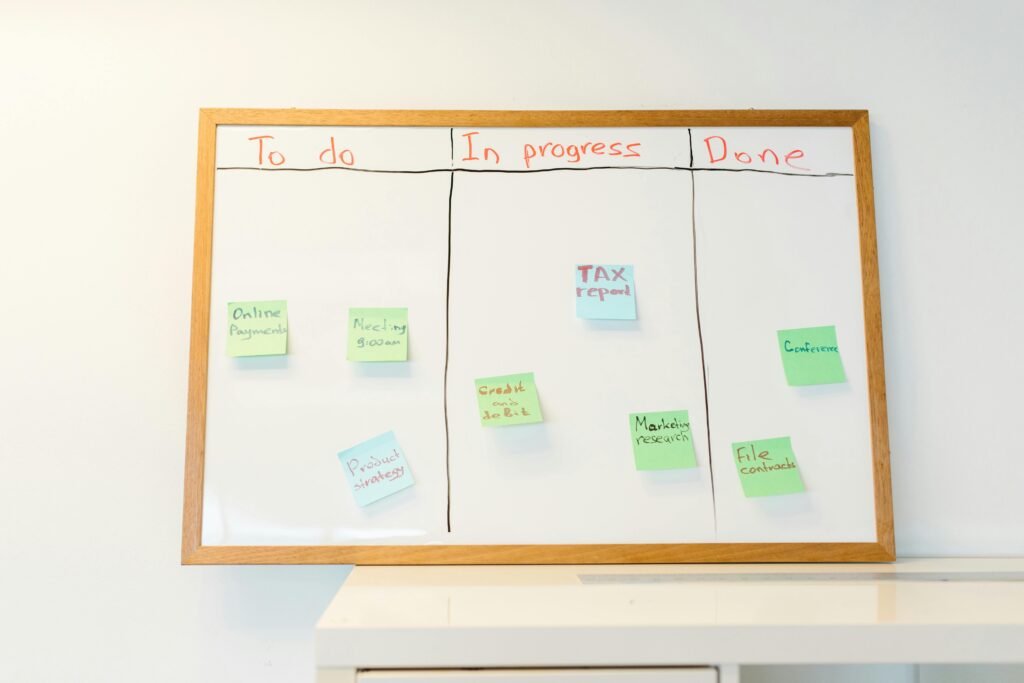
Creating flexibility in your daily routine can help you maintain focus and make steady progress, even when unexpected events arise.
A practical way to build this adaptability is by implementing methods that visually organize your work, such as the Kanban technique.
This approach breaks tasks into categories like backlog, to do, in progress, and done, allowing you to see exactly where you stand with each project.
Whether you use a physical board or a digital tool, this method gives you the clarity to stay organized and flexible without feeling overwhelmed by the scope of your goals.
One benefit of adopting a more adaptable system is that it helps you manage shifting priorities without losing track of what’s important.
Instead of feeling constrained by a rigid plan, you can focus on progress within the broader context of your goals.
For example, if an urgent task comes up, the Kanban system allows you to reshuffle priorities without derailing your entire workflow.
This type of approach ensures that you’re responsive to changes while still keeping an eye on your overarching objectives.
Another way to cultivate flexibility is to regularly assess how you’re allocating your time and energy.
It’s easy to fall into patterns that no longer serve you, so make a habit of reflecting on what’s working and what needs adjustment.
For instance, if you notice that certain tasks consistently get delayed, consider breaking them into smaller steps or moving them to a time of day when you feel more productive.
Being open to modifying your approach allows you to optimize your routine in ways that suit your current circumstances.
Technology can also play a valuable role in supporting a more flexible approach to productivity.
Tools like task management apps, calendar systems, or even simple digital timers can help you track progress and adapt as needed.
By leveraging these resources, you can make quick updates to your plan, ensuring that your time is used efficiently no matter what comes your way.
Flexibility doesn’t mean abandoning structure; it means creating a system that works for you rather than one that limits you.
Strategies to Get Things Done

To take charge of your productivity and avoid spending too much time on planning, try incorporating practical, action oriented strategies into your routine.
One proven method is the Pomodoro Technique, which encourages working in focused intervals.
By dedicating 25 minutes to a specific task, followed by a short break, this technique helps maintain concentration while preventing burnout.
Developed by Francesco Cirillo, it improves focus and productivity.
This structure can be especially helpful if you struggle with staying on track or tend to get distracted throughout the day.
Another powerful tool is a well organized to do list, tailored to your current priorities.
Rather than creating an overwhelming list of every single task, focus on identifying a few key items that align with your short term and long term objectives.
Breaking these tasks into smaller, manageable steps can make them feel less daunting and easier to tackle.
Consider experimenting with different formats, such as categorizing tasks by urgency or grouping them by type, to find a system that works best for you.
Time tracking apps can also offer valuable insights into how you’re spending your day.
These tools help you spot inefficiencies and identify areas where you might need to adjust your focus.
For example, if you notice you’re spending too much time on low priority tasks, you can reallocate that time to activities that drive meaningful progress toward your goals.
Many apps also feature reminders and alerts, which can help keep you accountable as you move through your daily schedule.
Another effective strategy involves using “batching,” where you group similar tasks together to complete them in one dedicated block of time.
For example, if you have several emails to write or phone calls to make, setting aside a specific hour to complete all of them can save you the time and mental energy lost when switching between unrelated tasks.
This approach works well for routine activities and can free up more time for complex, creative, or high-priority work.
Lastly, don’t underestimate the power of small adjustments to your environment or habits.
Something as simple as creating a dedicated workspace, silencing unnecessary notifications, or setting clear boundaries with colleagues and family during focused work hours can significantly improve your ability to get things done.
Even minor changes can have a lasting impact when applied consistently, helping you build routines that support your productivity goals.
Balancing Planning and Action

Striking the right balance between planning and taking action can transform the way you approach your day.
While a well thought out plan provides structure, it’s the steps you take that bring those plans to life.
Tony Robbins’ Rapid Planning Method (RPM) emphasizes the importance of aligning your daily actions with long term goals, ensuring that every effort contributes toward meaningful outcomes.
It focuses on being results-oriented and purpose-driven, helping to create a massive action plan.
By keeping your objectives at the forefront, you’re better equipped to make decisions that maximize productivity.
One way to stay focused on both planning and execution is to identify your “why.”
Ask yourself why a particular task or goal matters to you.
This simple step helps connect your actions to a larger purpose, keeping you motivated to follow through.
When you tie your daily efforts to a greater vision, you’ll find it easier to prioritize and stay on track, even when distractions or unexpected demands arise.
Another effective approach is to break large goals into smaller, actionable steps.
For instance, instead of aiming to complete an entire project in one go, identify the first task that moves the project forward.
Tackling these smaller components reduces overwhelm and makes progress feel more manageable.
This incremental strategy encourages consistent action while still allowing room to revisit and refine your broader plans.
Time blocking can also help you dedicate specific portions of your day to both planning and action.
For example, you might reserve 15 minutes in the morning to review your goals and map out key tasks for the day.
The rest of the time can then be spent executing those tasks.
This ensures that you’re not overloading your schedule with either endless planning or unstructured activity.
At times, it can be tempting to fall into the trap of perfectionism, spending hours refining a plan instead of implementing it.
To counter this tendency, adopt the mindset that action doesn’t need to be flawless to be effective.
Imperfect progress is still progress, and taking the next step; even if it’s not perfect, can lead to new insights or opportunities you wouldn’t discover otherwise.
This mindset frees you to experiment, learn, and adapt as you go.
Ultimately, finding balance is an ongoing process.
Some days may require more planning, while others may call for immediate action.
By remaining flexible and focused on your priorities, you can create a workflow that supports both thoughtful preparation and consistent execution, ensuring steady progress toward your objectives.
Conclusion and Key Takeaways

Effective time management is a skill that evolves with practice and reflection.
By shifting your mindset from solely planning to taking purposeful action, you empower yourself to move closer to your goals with clarity and intention.
Recognizing that plans serve as a guide rather than a rigid rulebook helps you stay adaptable and resilient when things don’t go as expected.
Start small by identifying what matters most and taking steps toward those priorities.
Whether it’s adopting tools like the Pomodoro Technique, experimenting with visual task management methods, or simply blocking time to focus on key tasks, the goal is to create systems that support progress without becoming overly complicated.
Consistency in these small efforts often leads to meaningful results over time.
Flexibility is another crucial piece of the puzzle.
When you remain open to adjustments, you can respond to unexpected changes without losing sight of your bigger picture.
Take time to regularly reflect on your strategies, assessing what’s effective and where improvements are needed.
This self-awareness keeps your approach dynamic and tailored to your current needs.
Ultimately, the path to getting things done is not about waiting for the perfect conditions but about building momentum through action.
Each task you complete, no matter how small, reinforces your ability to tackle the next one.
By balancing thoughtful planning with consistent execution, you create a productive rhythm that keeps you moving forward, even on challenging days.
Remember, there’s no universal formula for managing your time.
The process is about finding what works for you, staying curious, and allowing room for growth.
Every step you take brings you closer to your goals, and every adjustment you make helps refine your approach.
With these strategies in mind, you can break free from overplanning and start making meaningful progress in your life.
Attractive section of content. I simply stumbled upon your blog and in accession capital to say that I acquire in fact loved account your blog posts. Any way I will be subscribing in your augment or even I success you get right of entry to consistently quickly.
Your way of explaining all in this piece of writing is in fact nice, all can effortlessly understand it, Thanks a lot.
Asking questions are really good thing if you are not understanding anything fully, however this paragraph gives nice understanding yet.
This is a very good tip especially to those fresh to the blogosphere. Simple but very precise info… Thank you for sharing this one. A must read article!
Spot on with this write-up, I really believe this site needs far more attention. I’ll probably be returning to see more, thanks for the information!
Hi there are using WordPress for your site platform? I’m new to the blog world but I’m trying to get started and set up my own. Do you need any coding expertise to make your own blog? Any help would be really appreciated!
byueuropaviagraonline
Useful info. Fortunate me I found your site accidentally, and I’m stunned why this accident didn’t happened in advance! I bookmarked it.
leebet
you’re actually a excellent webmaster. The site loading pace is incredible. It seems that you’re doing any distinctive trick. Furthermore, The contents are masterwork. you’ve performed a fantastic task in this subject!
Рио Бет
Good day! This is kind of off topic but I need some guidance from an established blog. Is it very difficult to set up your own blog? I’m not very techincal but I can figure things out pretty fast. I’m thinking about creating my own but I’m not sure where to start. Do you have any points or suggestions? Thank you
garipovbulat
https://www.bnbaccess.eu/art/le-code-promo-Melbet.html
https://p-10.ru/news/1xbet_promokod_257595___bonus_na_depozit_6500_rubley.html