
Introduction to Safe Phrasing
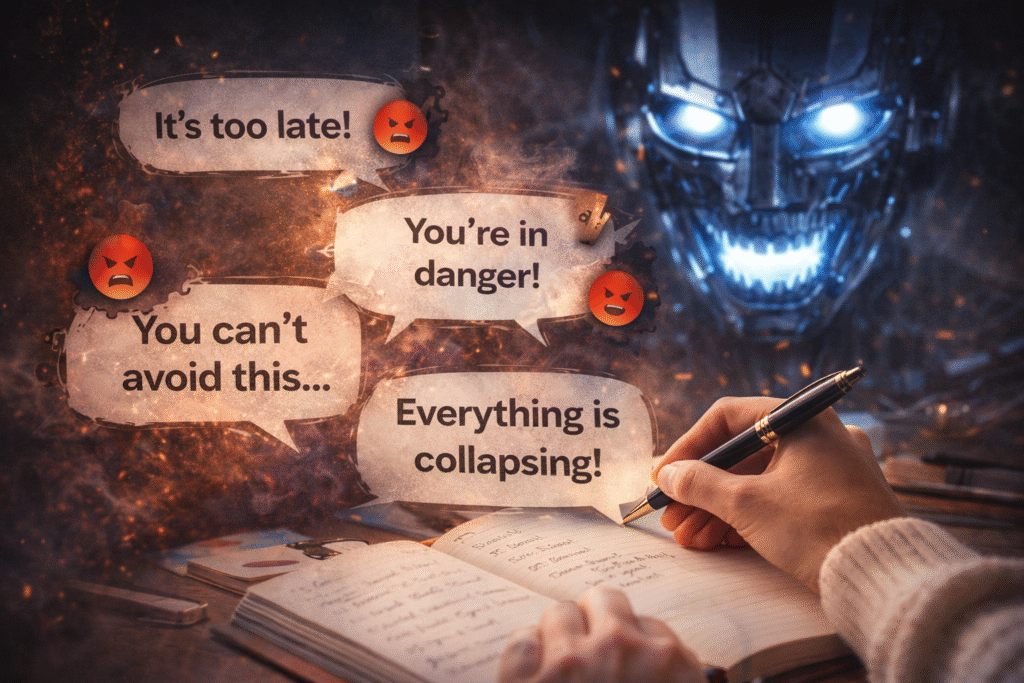
Safe phrasing is a strategy frequently employed in artificial intelligence to ensure content remains neutral and avoids any language that might spark controversy.
This approach is rooted in the need for AI to comply with guidelines, maintain professionalism, and appeal to a broad audience.
On the surface, it seems like a practical solution, especially in fields where accuracy and neutrality are key.
However, when it comes to creative or impactful communication, this overly cautious language can strip away the qualities that make writing engaging and relatable.
What makes safe phrasing so prevalent is its ability to minimize risk.
AI is programmed to avoid statements or ideas that could be interpreted as biased or inflammatory.
As a result, it defaults to phrasing that is so measured and inoffensive that it often feels impersonal.
While this keeps AI-generated content from crossing any lines, it also makes the writing lackluster and less likely to resonate with readers on a meaningful level.
For example, if an AI were tasked with describing a significant cultural event, it might choose language that is technically accurate but emotionally detached.
The result could be a description that feels more like a report than a story, failing to evoke the emotions tied to the event.
On the other hand, human writers naturally draw from personal experience, cultural knowledge, and emotional insight to make their narratives compelling.
They take risks with language, using metaphors or anecdotes that bring their words to life; something AI, constrained by its programmed caution, struggles to replicate.
Another side effect of safe phrasing is the way it dampens originality.
AI writing often follows predictable patterns, relying on widely accepted terms and structures.
While this may prevent missteps, it also results in content that feels repetitive and uninspired.
Safe phrasing leaves little room for the unexpected, which is often what grabs readers’ attention and keeps them engaged.
It’s the quirks, the bold word choices, and the occasional surprises in human writing that make it stand out, qualities that are often lost when AI opts for the safest path.
It’s important to recognize that the reliance on safe language isn’t just a technical limitation; it’s a reflection of how AI is designed to function.
The algorithms that power these systems are built with priorities that favor risk avoidance over creativity.
This doesn’t mean AI can’t ever produce impactful content, but it does highlight a significant challenge in balancing safety with the need for human like expression.
When safety takes precedence, the result is often writing that informs but rarely inspires.
Impact on Creativity
When artificial intelligence relies on safe phrasing, it inadvertently suppresses the freedom and innovation that fuel creative expression.
Creative writing thrives on taking risks, breaking conventions, and exploring the unexpected, but AI’s cautious approach often hinders these qualities.
By prioritizing neutral and non-controversial language, AI-generated content can lack the distinctiveness that makes writing captivating and memorable.
The structured, formulaic tendencies of AI writing become especially evident in genres that demand imaginative storytelling or emotional depth.
Take, for example, a fictional narrative crafted by AI.
While it may follow all the technical rules of storytelling; plot progression, character development, and pacing, the language is often devoid of the quirks or bold phrasing that give stories personality.
Human writers, by contrast, might experiment with unconventional descriptions, vivid imagery, or emotionally charged dialogue, crafting a piece that connects with readers on a deeper level.
Another area where safe phrasing limits creativity is in persuasive or opinion based writing.
Humans excel at weaving personal insights, analogies, and humor into their arguments to make their points engaging and relatable.
AI, however, tends to rely on broad generalizations and overly balanced language, avoiding any phrasing that could be perceived as overly assertive or divisive.
While this keeps the content neutral, it can also render it bland and less compelling to readers.
Furthermore, the cautious nature of AI writing can stifle the ability to experiment with tone or voice.
Creative works often stand out because they adopt a unique perspective or embrace an unusual style that surprises and intrigues the audience.
AI’s tendency to replicate pre-approved patterns often results in content that feels flat and overly familiar, diminishing its potential to inspire or leave a lasting impression.
Comparison with Human Writing

One of the most striking differences between AI and human writing lies in the way humans weave individuality into their words.
Every writer brings a unique perspective shaped by personal experiences, cultural influences, and emotional insights.
This individuality is what makes human writing feel alive and relatable.
AI, however, struggles to replicate this depth because its process relies on analyzing patterns and probabilities rather than experiencing or interpreting the world as humans do.
Human writing often carries a sense of risk and originality.
Writers take liberties with language, playing with sentence structure, experimenting with rhythm, and crafting imagery that surprises and delights.
These creative decisions can result in a voice that feels distinct and genuine.
AI, on the other hand, tends to favor uniformity, adhering to established norms to avoid stepping into uncertain territory.
This cautious approach may ensure technical accuracy, but it also sacrifices the charm and unpredictability that make writing memorable.
Humans also excel at capturing subtle emotions and shifting tones in their work.
A piece of writing can be simultaneously playful and profound, sharp and empathetic, depending on the writer’s intent.
These tonal shifts often reflect an understanding of the audience and the ability to adapt based on context.
AI, by contrast, operates within narrower boundaries, often delivering a tone that feels overly consistent.
While consistency can have its advantages, it risks making the writing feel sterile, especially when compared to the dynamic nature of human expression.
Another area where AI falls short is the use of storytelling elements.
Humans naturally incorporate anecdotes, metaphors, and cultural references to enhance their message.
These tools not only add depth to the writing but also create connections with readers by invoking shared experiences or universal themes.
AI can simulate these techniques to some extent, but it lacks the ability to genuinely understand why or how these elements resonate on an emotional level.
This gap in understanding often results in writing that feels more mechanical than heartfelt.
Even humor, an integral part of engaging writing, highlights the disparity between AI and human capabilities.
Humor relies heavily on timing, cultural nuance, and an intuitive grasp of irony or absurdity; all things that are incredibly difficult for AI to replicate effectively.
When humans inject humor into their writing, it often feels spontaneous and personal. AI-generated humor, however, tends to be formulaic, missing the spark that makes it genuinely funny.
Ultimately, the human ability to take creative risks, evoke emotion, and adapt tone allows for writing that feels meaningful and inspired.
While AI can mimic structure and grammar, it struggles to capture the complexity of human thought and expression, leaving its output feeling more like an imitation than a true reflection of individuality.
Potential Risks of Overusing Safe Language

When writing leans too heavily on overly cautious language, it can undermine the very purpose of communication: connection.
Safe phrasing, while useful for avoiding controversy or maintaining neutrality, can end up feeling impersonal and disconnected from the audience.
Readers often seek writing that challenges them, sparks curiosity, or makes them feel seen, and content that is overly restrained rarely achieves these goals.
One significant risk of safe language is how it can make writing feel formulaic.
By relying on predictable word choices and sentence structures, the text loses its ability to stand out.
Readers are bombarded with countless messages daily, and what often captures their attention is a fresh perspective or a unique voice.
Writing that follows a rigid, risk averse formula not only fails to grab attention but also risks being quickly forgotten.
Moreover, safe phrasing can dilute the emotional impact of writing.
Words have the power to evoke deep feelings, whether it’s excitement, empathy, or urgency.
However, when language is stripped down to avoid any potential misstep, it becomes harder to tap into those emotions.
This is especially problematic in storytelling or persuasive writing, where emotional resonance plays a key role in drawing readers in and keeping them engaged.
Without it, even the most well-intentioned message may fall flat.
Another consequence of relying too much on cautious language is the limitation it places on meaningful discussions.
Thought-provoking topics often require bold statements or challenging ideas to spark dialogue and inspire critical thinking.
Safe phrasing, by avoiding anything that could be deemed contentious, can result in writing that feels superficial.
This can leave readers feeling unsatisfied, as though they’ve skimmed the surface of an issue without ever getting to its core.
Additionally, when content lacks a distinct voice or perspective, it becomes less relatable.
Readers are drawn to authenticity and the sense that a real person, with real thoughts and feelings, is behind the words.
By contrast, overly cautious writing often feels mechanical, as though it was generated by a system prioritizing neutrality over expression.
This detachment can prevent readers from forming a connection with the content, making them less likely to engage with it or return to it in the future.
Even the process of learning and discovery can be affected by overusing safe language.
Writing that avoids risk may shy away from asking tough questions or exploring uncharted ideas, which are often the catalysts for innovation.
When creativity and curiosity are stifled in favor of caution, opportunities to present new insights or challenge conventional thinking can be lost.
Readers may walk away from such content feeling uninspired, missing out on the kind of writing that encourages exploration and sparks their imagination.
Balancing Safety and Boldness in AI
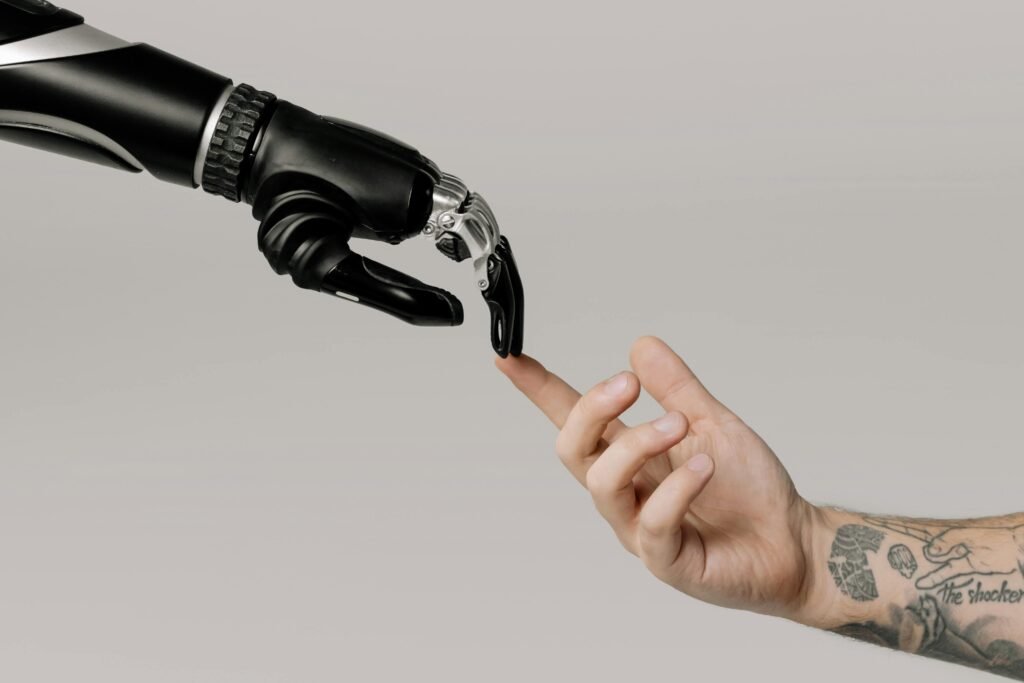
For artificial intelligence to create writing that is both responsible and engaging, it must strike a delicate balance between caution and creative expression.
While safe phrasing serves an essential role in avoiding missteps, introducing calculated risks in AI-generated content can lead to more authentic, memorable results.
The key lies in teaching AI to identify when boldness adds value and when restraint is necessary.
One effective strategy is programming AI to recognize nuance.
Instead of rigidly avoiding potentially complex or charged topics, AI can be trained to handle these areas with sensitivity, addressing them in a way that remains thoughtful without being overly cautious.
For example, instead of watering down language to the point of detachment, AI could integrate phrasing that reflects genuine curiosity or empathy.
This requires sophisticated algorithms capable of assessing context and adapting language accordingly.
Another avenue for fostering boldness is expanding the range of linguistic styles AI can replicate.
Much of today’s AI relies on heavily sanitized datasets, which limits the diversity of voices and tones it can produce.
By exposing AI to a broader variety of writing styles; ranging from expressive poetry to impassioned editorials, it can learn to emulate the dynamic elements that make human writing so engaging.
A wider pool of training data encourages the development of AI tools that reflect the complexity of human communication while maintaining appropriateness.
Incorporating audience awareness is another step forward. Human writers instinctively tailor their tone and word choices based on their intended readers, adjusting for factors like formality, subject matter, or cultural nuance.
AI systems can be equipped with similar adaptive capabilities by including parameters that allow for customization.
This not only gives AI the ability to better connect with different audiences but also provides room for more creative and varied outputs.
Encouraging AI to break free from rigid, template like structures also paves the way for more original content.
While technical accuracy is essential, excessive adherence to formulas often results in text that feels repetitive and uninspired.
AI models can be designed to inject small deviations from standard phrasing or experiment with sentence flow. These subtle departures from the norm can add texture to AI-generated writing, making it feel less mechanical.
Collaboration between AI and human writers offers an additional opportunity to blend safety with creativity.
AI tools can handle the foundational aspects of writing; like grammar and structure, while leaving room for human writers to infuse personality, emotion, and originality.
By working in tandem, AI and humans can amplify each other’s strengths, with AI providing efficiency and humans adding the soul that makes writing resonate.
Even humor and storytelling; elements that often fall flat in AI-generated content, can benefit from a more flexible approach.
Training AI to understand patterns in successful jokes or narratives could make it more adept at delivering content that feels lively and engaging.
Pairing this training with safeguards ensures that the humor or stories remain appropriate for the intended audience.
Balancing safety and boldness requires constant refinement of AI systems, but by embracing these strategies, it’s possible to create writing that doesn’t just inform but also connects with readers in a meaningful way.
Future Implications

The development of AI language tools presents both challenges and exciting opportunities for the future of communication.
As researchers continue to refine these systems, we’re likely to see advancements that enable AI to produce writing that feels less mechanical and more dynamic.
These improvements could help bridge the gap between AI-generated content and the authentic, human centered writing that readers connect with on a deeper level.
One promising area for growth lies in enhancing AI’s ability to interpret and adapt to context.
Currently, AI often struggles to fully understand the emotional or cultural nuances behind a piece of writing.
However, with ongoing advancements, future systems may become more adept at recognizing subtle shifts in tone, purpose, or audience needs.
This could allow for content that is not only accurate but also thoughtfully tailored to the situation, making it feel more intuitive and relatable.
Additionally, as AI technology advances, there’s potential for it to become better at incorporating stylistic variety into its outputs.
Instead of defaulting to overly neutral phrasing, future AI models could learn to emulate a broader spectrum of voices and approaches.
This might include everything from conversational, lighthearted tones to richly descriptive language, depending on the specific purpose of the content.
Such versatility could open the door to more compelling and engaging writing across diverse fields.
Collaboration between humans and AI will likely continue to evolve as well, with the partnership becoming more seamless over time.
AI could handle repetitive or time consuming tasks, while humans focus on adding the depth, personality, and creativity that machines often lack.
By complementing each other’s strengths, this collaboration has the potential to enhance productivity without sacrificing the quality or originality that defines human writing.
However, these advancements will also raise important questions about ethical responsibility.
As AI becomes more capable of generating emotionally resonant and persuasive content, it’s crucial to ensure that these tools are used in ways that respect authenticity, transparency, and the values of their intended audience.
Striking a balance between technological innovation and ethical considerations will be key to harnessing AI’s potential responsibly.
The future of AI in writing holds the promise of creating tools that not only assist with practical tasks but also contribute to more meaningful communication.
By continuing to refine these systems, there’s an opportunity to push beyond safe, predictable language and explore new frontiers of creativity and expression; offering writers and readers alike an experience that feels both innovative and genuinely impactful.
💡 Quick question before you go:
Are you using AI in your copywriting — or letting it use you?
Take the 2-minute quiz to uncover your Copywriting + AI Style, get your personalized analysis, and receive a free copy of The Marr Method of Copywriting.
 👉 Take the Quiz — Unlock Your Style
Spot on with this write-up, I seriously think this amazing site needs far more attention. I’ll probably be back again to read through more, thanks for the information!
Everyone loves what you guys tend to be up too. This kind of clever work and coverage! Keep up the superb works guys I’ve incorporated you guys to my personal blogroll.
Ремонт бытовой техники становится все более популярным в нашей жизни потому что он помогает избежать ненужных трат . Помимо этого, ремонт бытовой техники также помогает сохранить природные ресурсы потому что он способствует повторному использованию деталей. Таким образом, ремонт бытовой техники является не только экономически выгодным, но и экологически чистым .
Стоит отметить, что ремонт бытовой техники предполагает наличие определенных умений и опыта . Большинство людей не обладают такими знаниями и навыками , поэтому они часто требуют услуг квалифицированных ремонтников. Профессиональные мастера могут быстро и качественно отремонтировать любую бытовую технику .
## Раздел 2: Типы ремонта бытовой техники
Существует несколько видов ремонта бытовой техники, в зависимости от характера поломки . Один из наиболее распространенных типов ремонта – это ремонт поврежденных компонентов . Также часто выполняется диагностика неисправностей и настройка оборудования . Помимо этого, ремонт бытовой техники может включать в себя и другие услуги .
Диагностика неисправностей является важнейшим этапом ремонта бытовой техники потому что она дает возможность выявить источник проблемы . После проверки работоспособности ремонтник может начать устранять неисправность . Ремонт бытовой техники может быть выполнен как в мастерской, так и на дому .
## Раздел 3: Преимущества ремонта бытовой техники
Ремонт бытовой техники обладает несколькими достоинствами . Одним из основных плюсов является финансовая выгода потому что ремонт стоит меньше, чем приобретение новой техники . Кроме того, ремонт бытовой техники также позволяет избежать потери времени потому что ремонт можно произвести в максимально короткий период.
Также ремонт бытовой техники помогает сохранить природные ресурсы потому что он помогает сократить потребление новых ресурсов . Более того, ремонт бытовой техники также дает возможность продлить жизнь техники.
## Раздел 4: Заключение и перспективы
Ремонт бытовой техники является важной и перспективной услугой . Он позволяет не только сэкономить средства, но и помочь окружающей среде . Таким образом, ремонт бытовой техники является не только финансово эффективным, но и ориентированным на сохранение природы.
В будущем ремонт бытовой техники будет только набирать популярность потому что все больше людей начинают давать приоритет охране окружающей среды. Таким образом, ремонтники бытовой техники будут иметь хорошие перспективы. Будущее ремонта бытовой техники развитое и эффективное .
мастерская по ремонту бытовой техники https://servisnyj-centr-ekaterinburg.ru/
выпрямитель дайсон купить в москве выпрямитель дайсон купить в москве .
Great post. I was checking constantly this blog and I’m impressed! Very useful info specifically the last part 🙂 I care for such info a lot. I was seeking this certain information for a long time. Thank you and good luck.
:::::::::::::::: ONLY THE BEST ::::::::::::::::
Content from TOR websites Magic Kingdom, TLZ,
Childs Play, Baby Heart, Giftbox, Hoarders Hell,
OPVA, Pedo Playground, GirlsHUB, Lolita City
More 3000 videos and 20000 photos girls and boys
h**p://tiny.cc/sficzx
h**p://j1d.ca/_J
h**p://put2.me/muhcsh
Complete series LS, BD, YWM, Liluplanet
Sibirian Mouse, St. Peterburg, Moscow
Kids Box, Fattman, Falkovideo, Bibigon
Paradise Birds, GoldbergVideo, BabyJ
h**p://citly.me/47kMX
h**p://4ty.me/ibhi7c
h**p://tt.vg/URoSx
Cat Goddess, Deadpixel, PZ-magazine
Tropical Cuties, Home Made Model (HMM)
Fantasia Models, Valya and Irisa, Syrup
Buratino, Red Lagoon Studio, Studio13
—————–
—————–
000A000835
I like what you guys tend to be up too. This sort of clever work and reporting! Keep up the very good works guys I’ve incorporated you guys to my own blogroll.
Appreciating the dedication you put into your site and in depth information you provide. It’s good to come across a blog every once in a while that isn’t the same outdated rehashed material. Great read! I’ve bookmarked your site and I’m adding your RSS feeds to my Google account.