
Introduction: Rethinking Fear
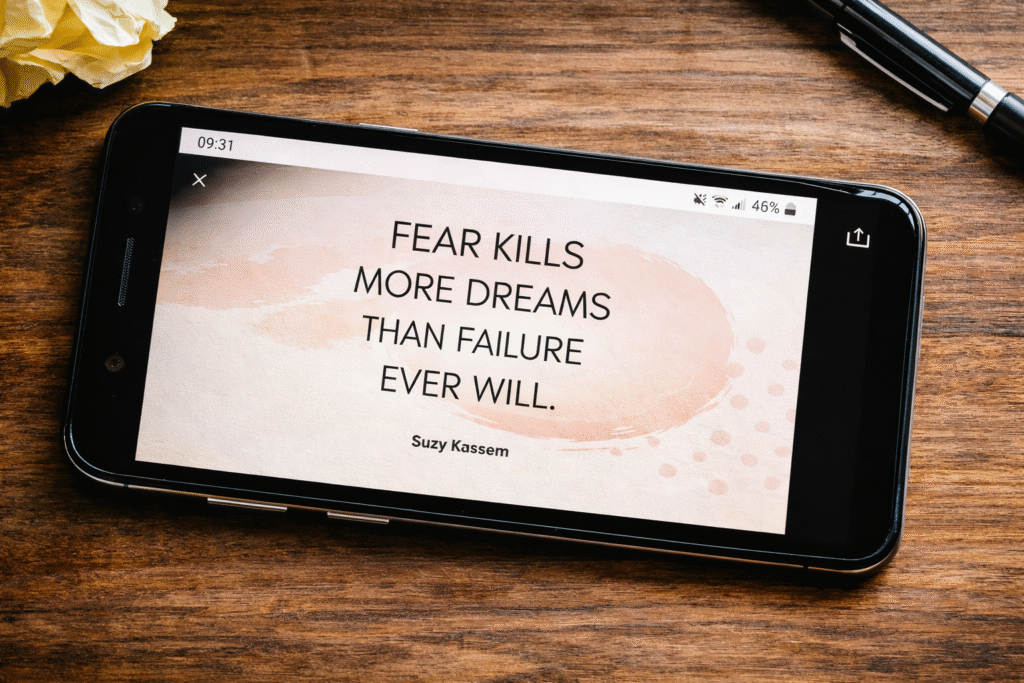
Fear has a way of messing with your head.
Most people think it’s all about being scared to fail; like not landing the job, not passing the test, or just falling flat on your face.
But there’s another side to it that doesn’t get talked about enough: the fear of success. Sounds strange, right?
But think about it; success means change, responsibility, and sometimes stepping into a version of yourself that feels totally new.
It’s not just the fear of messing up; it’s the fear of what happens when you actually get it right.
Picture this: you’ve been dreaming of starting your own business, but as soon as the opportunity feels real, doubt kicks in.
What if you can’t handle the pressure? What if the success changes how people see you?
Suddenly, staying where you are; safe and comfortable, feels easier.
That’s the tricky part about fear. It doesn’t just keep you from failing; it can keep you from trying.
What’s really happening here is a tug of war between where you are now and the person you know you could become.
And honestly, that can feel overwhelming.
Meeting your potential isn’t just about achieving goals; it’s about stepping into a new version of yourself, and that takes some guts.
Fear shows up as this constant voice in your head, feeding into self-doubt and telling you all the reasons why sticking with the status quo might be the safer bet.
But here’s the kicker: fear isn’t a bad thing. It’s just your brain’s way of trying to keep you in your comfort zone.
It’s not really about avoiding failure or success; it’s about avoiding risk.
The good news? That voice in your head doesn’t always have to win. Fear might be loud, but it’s not the whole story.
Understanding Potential

Potential isn’t just some buzzword; it’s about those abilities or talents you haven’t tapped into yet, the stuff that could totally change your life if you put in the effort.
A lot of people don’t realize how much they’re capable of because they get stuck in their own heads.
It’s about seeing opportunities for growth and having the courage to go after them.
But here’s the thing; unlocking potential isn’t just about skills.
It’s about believing you’ve got what it takes.
Think about it: if you’re constantly second guessing yourself, how can you even begin to explore what’s possible?
That’s why self-belief is such a game changer.
Look at stories from people like Oprah or Steve Jobs.
They didn’t start off as legends; they just saw their potential and went all in.
Oprah turned a tough upbringing into fuel for her success, while Steve Jobs redefined entire industries because he believed in pushing boundaries.
Their journeys prove that potential isn’t about where you start; it’s about what you’re willing to do to grow.
This isn’t just about big names, though.
It’s about everyday people too. Maybe it’s a student learning a new skill or a professional tackling a new role.
It’s these steps, no matter how small, that bring potential to life.
Self-Doubt Mindset

Self-doubt has a sneaky way of showing up, especially when you’re on the edge of trying something new or leveling up in life.
It plants these little questions in your head; “What if I’m not good enough?” or “What if I mess this up?”, and suddenly, you’re stuck overthinking instead of taking action.
That’s how powerful belief is. When you start to trust yourself, fear doesn’t disappear, but it becomes less paralyzing.
The thing about self-doubt is that it doesn’t just pop up out of nowhere.
It’s fed by past failures, comparisons to others, and sometimes just unrealistic expectations you set for yourself.
People who constantly doubt their abilities tend to avoid situations where they might fail, which just reinforces that insecurity.
It’s a loop, and breaking out of it means changing how you talk to yourself and approach challenges.
One trick to quiet that doubtful voice is to focus on small wins.
Say you’re trying to learn a new skill, like coding or public speaking. Instead of obsessing over being perfect, aim for progress; like writing your first simple program or speaking up once in a group discussion.
Celebrating those smaller milestones helps build momentum and shows your brain, “Hey, I can actually do this.”
Sometimes, doubt comes from a lack of clarity or purpose.
So, when doubt creeps in, it helps to take a step back and ask yourself why you’re doing what you’re doing.
Having a clear “why” makes it easier to push through the uncertainty because your focus shifts to the bigger picture.
Another way to handle self-doubt? Get outside input.
Whether it’s from a mentor, a coach, or even a close friend, hearing someone else’s perspective can put your worries into context.
They’ll often see strengths in you that you’ve overlooked, which can be a real confidence booster.
Plus, they can help you spot opportunities for improvement without making you feel like giving up altogether.
Examples of Realizing Potential
There are so many inspiring examples of people realizing their potential once they push past fear and self-doubt.
Take Thomas Edison; he didn’t just stumble onto the lightbulb on his first try. He failed thousands of times, but he didn’t let those failures stop him.
He kept going because he saw the bigger picture.
That’s the thing about potential; it’s not about getting it right the first time, it’s about showing up and staying in the game even when it feels impossible.
Think about J.K. Rowling.
She didn’t grow up wealthy or with every opportunity handed to her. In fact, she faced rejection after rejection when trying to publish the first “Harry Potter” book.
She could’ve quit so many times, but instead, she chose to keep going.
That persistence turned her into one of the most successful authors in history.
Her story shows how powerful it is to keep believing in what you’re capable of, even when others don’t see it.
It’s not just big name success stories, though.
Everyday people are realizing their potential in smaller but equally impactful ways.
Picture someone terrified of public speaking; they start small, maybe speaking up at a team meeting or practicing in front of a mirror.
Eventually, they gain enough confidence to lead a presentation or even speak at a big event.
That one small step of saying, “I’m going to give this a shot,” opens up a world of possibilities they didn’t think was possible.
Another example? Learning a completely new skill, like coding or a foreign language, even when it feels way outside your comfort zone.
It’s easy to think, “I could never do that,” but progress happens one step at a time.
Maybe it’s writing that first simple line of code or finally being able to hold a basic conversation in another language.
Those little moments of progress are where potential starts to take shape.
And sometimes, it’s about bouncing back after life throws you a curveball.
Picture someone who loses their job; it’s a huge hit to their confidence.
But instead of giving up, they use it as a chance to pivot, maybe exploring a new career path they never considered before.
That kind of resilience can unlock doors they didn’t even know existed.
These moments, whether big or small, show that potential isn’t something you discover all at once.
It’s about those steady steps forward, even when it feels scary or uncertain.
The Role of Comfort Zones

Comfort zones are where things feel easy, predictable, and, well, comfortable.
It’s that place where you know what to expect, and there’s little risk of messing up.
But staying in that zone can quietly hold you back.
Sure, it feels safe, but growth doesn’t happen where everything stays the same.
The reality is, you’re never going to unlock new opportunities or uncover what you’re truly capable of if you never step out of that bubble.
Think about it like this: ever had the chance to take on a new project at work but said no because it seemed too hard?
Or maybe you’ve avoided signing up for a class or group activity because the idea of being the newbie felt awkward?
Those are moments when staying in your comfort zone feels like the easiest option; but it’s also the option that keeps you stuck.
Over time, that safe space can turn into a rut.
The tricky part is that stepping out feels risky, but it doesn’t mean jumping straight into the deep end.
Small, manageable steps can make it easier.
Maybe it’s something as simple as striking up a conversation with a new coworker, or volunteering to help out on a task that’s slightly outside your skillset.
Those tiny moves are how you start building the confidence to tackle bigger challenges later.
Even reflecting on past moments where you’ve succeeded can remind you what you’re capable of.
Remember a time you were nervous about trying something but did it anyway?
Maybe it was speaking up in a meeting or tackling a project you weren’t sure you could pull off.
Those wins, even if they felt small at the time, prove that you can handle more than you think.
Revisit those memories when you’re tempted to stay in your comfort zone; it’s like giving yourself a pep talk with proof.
The thing is, comfort zones aren’t bad; they serve a purpose, especially when you need stability.
But if you’re not careful, they can quietly turn into limits.
The key is learning to challenge yourself just enough to grow without overwhelming yourself.
It’s all about balance.
With time, those small risks start to feel less intimidating, and before you know it, you’ve stretched your limits further than you thought possible.
Growth doesn’t require giant leaps; it just needs consistent steps forward.
The Journey to Self-Discovery

Self-discovery isn’t some magical “aha” moment; it’s a process that takes time, effort, and a lot of honesty with yourself.
It’s about figuring out what drives you, what holds you back, and what you really want out of life.
Sometimes it means asking the hard questions: Are you stuck in a routine because it’s easy, or are you pushing yourself to grow?
Are you taking the risks needed to move forward, or are you letting fear decide for you?
Part of this journey is about learning to deal with the unknown.
Facing uncertainty is uncomfortable; it’s easy to feel like every step is a gamble.
But being adaptable is one of the most powerful tools you can have.
When things don’t go as planned, adaptability helps you pivot and stay focused on the bigger picture instead of giving up.
Another key part of self-discovery is taking the time to reflect.
Everyone gets caught up in the day to day grind, but when was the last time you really paused to think about what’s working and what’s not?
That reflection helps you notice patterns; maybe you always say no to opportunities because you’re scared of failing, or maybe you avoid challenges because you think you’re not ready.
Once you identify those habits, it’s easier to start shifting them.
Feedback can also be a game changer.
It’s easy to get stuck in your head and only see your flaws or doubts.
But when someone you trust shares their perspective, they often highlight things you’re great at that you’ve overlooked.
They might point out your strengths or suggest steps you hadn’t considered, giving you a fresh take on what’s possible.
It’s also about experimenting and being okay with not getting it perfect every time.
You might try new hobbies, take on challenges, or set goals that push you beyond what you think you can do.
Not every attempt will be a win, but every experience teaches you something about yourself; what you enjoy, where you excel, and where you want to grow.
Self-discovery doesn’t mean figuring everything out at once; it’s about showing up, trying things, and paying attention to what you learn along the way.
Conclusion: Embracing the Challenge

The real challenge isn’t just about chasing goals; it’s about facing the doubts and fears that come with change.
Growth isn’t comfortable, and let’s be real, stepping into something unfamiliar can be scary.
But staying where it’s “safe” often means selling yourself short.
The truth is, you can do hard things, even when fear tries to convince you otherwise.
Taking the first step doesn’t have to be dramatic.
It’s not about suddenly becoming a whole new person overnight; it’s about small actions that build momentum.
Whether that’s saying yes to something that scares you a little or trying again after a setback, every effort adds up.
Those little wins? They’re proof that you’re capable of more than you think.
It’s also important to get used to the idea that mistakes are part of the process.
Fear of failure can stop you before you even begin, but failing isn’t the end of the road.
It’s a chance to learn, adjust, and keep going. Each time you get back up, you’re proving to yourself that fear doesn’t get the final say.
What makes this whole process worth it is that it’s about you.
It’s not about meeting anyone else’s expectations or following someone else’s path.
It’s about figuring out what matters to you, what drives you, and what kind of life you want to create.
That’s why the work is so personal; it’s all about uncovering who you are and where you’re headed.
Fear doesn’t have to be the thing holding you back.
It can actually show you where you have room to grow.
So, the next time self-doubt starts creeping in, try looking at it differently.
Instead of asking, “What if I fail?” start asking, “What if I succeed?” That shift in perspective could change everything.
At the end of the day, you don’t have to have it all figured out to move forward.
The journey of growth and self-discovery is ongoing.
The key is being open to the process, showing up for yourself, and remembering that even the smallest steps forward count.
It’s not about being fearless; it’s about choosing to keep going, even when fear is tagging along for the ride.